

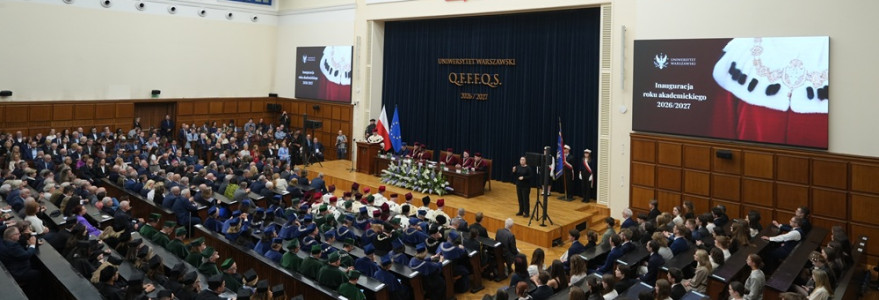
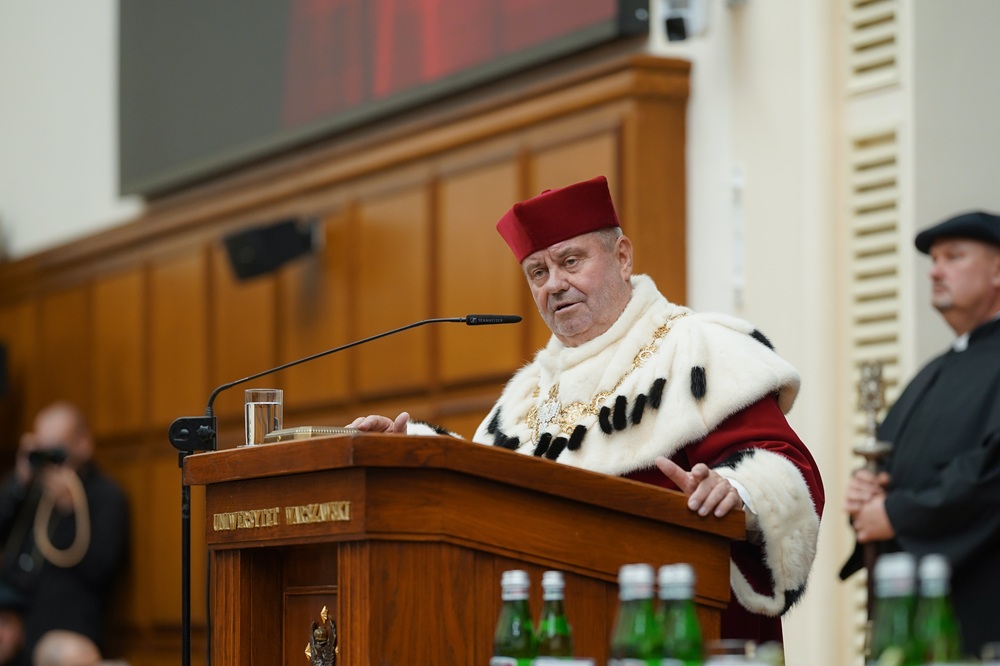
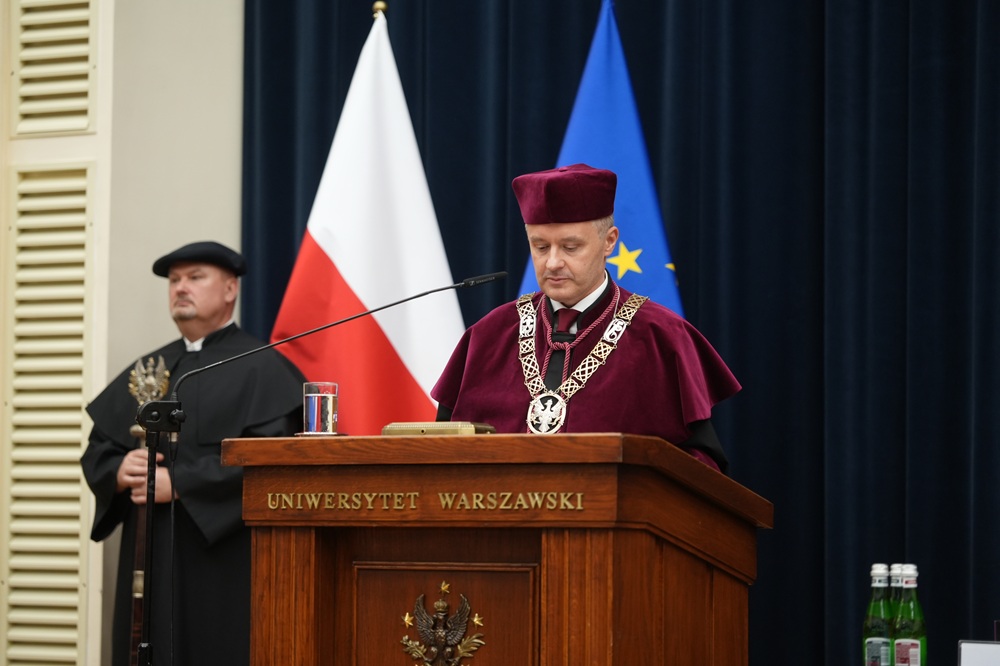
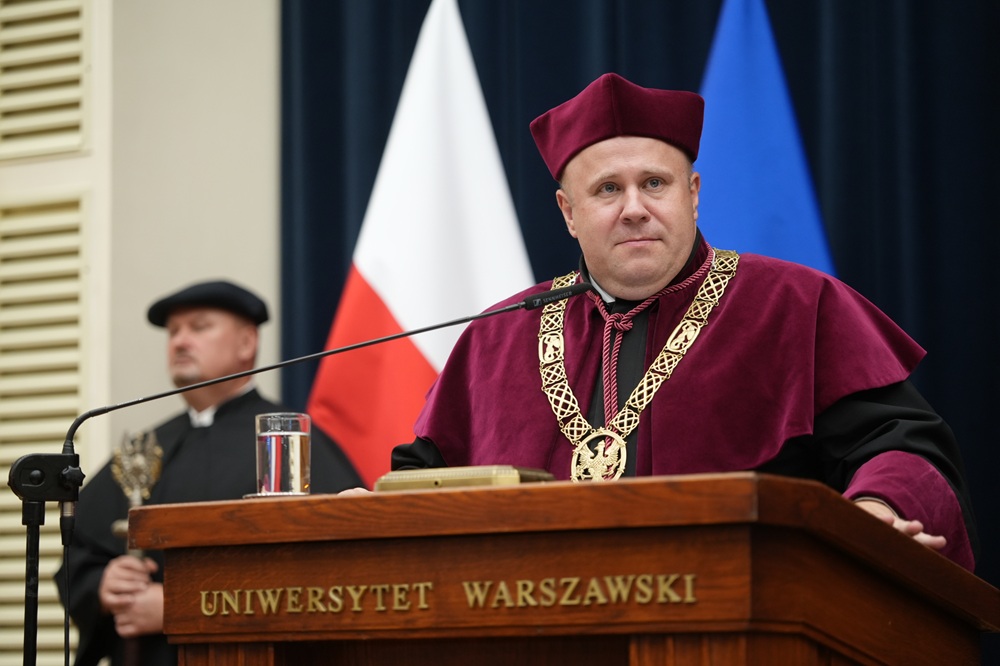
“The finest quality of the University of Warsaw is mutual respect. We are characterised by tolerance, openness and the pursuit of truth. Today, you are becoming students and doctoral candidates at the best university in Poland. We have a duty to show you all possible paths to development. Through hard work, you have a tremendous chance of success,” said Prof. Alojzy Z. Nowak, the UW Rector, addressing the newly admitted students and doctoral candidates. On 1st October, the ceremonial opening of the 2026/2027 academic year took place.
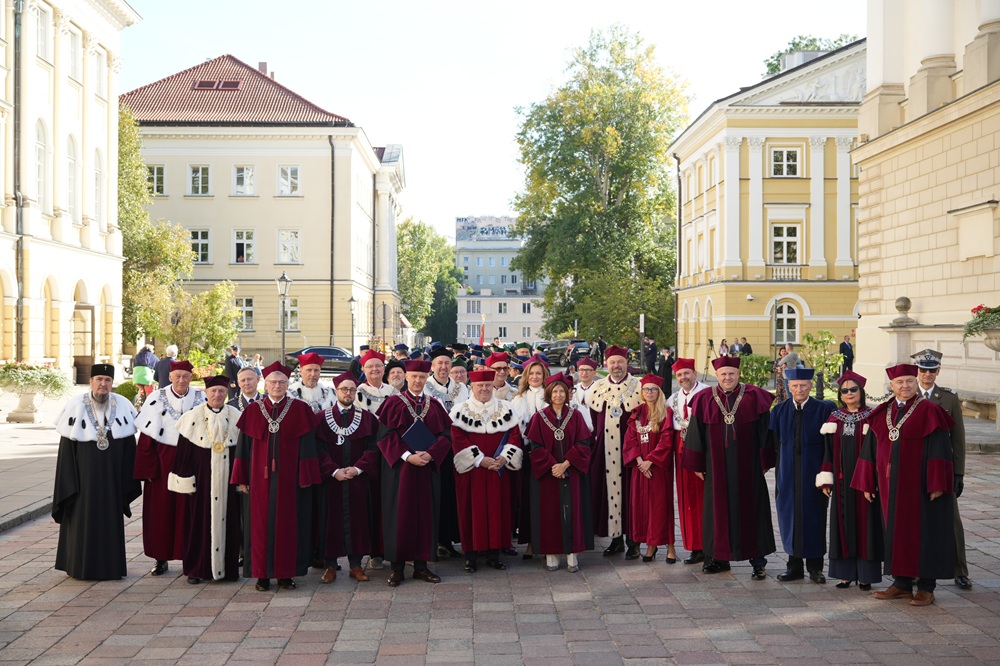
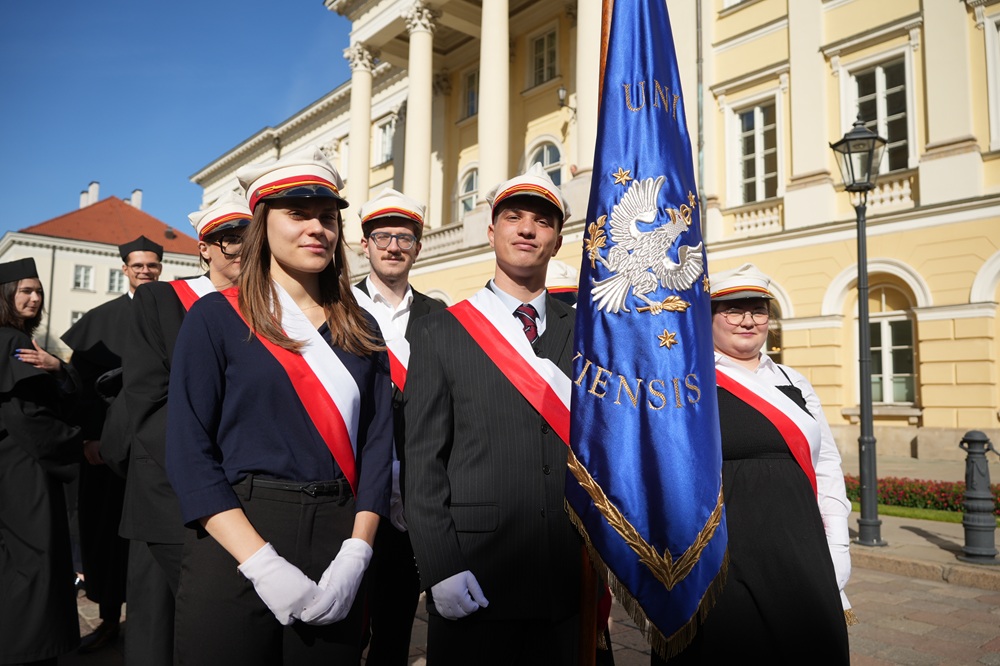
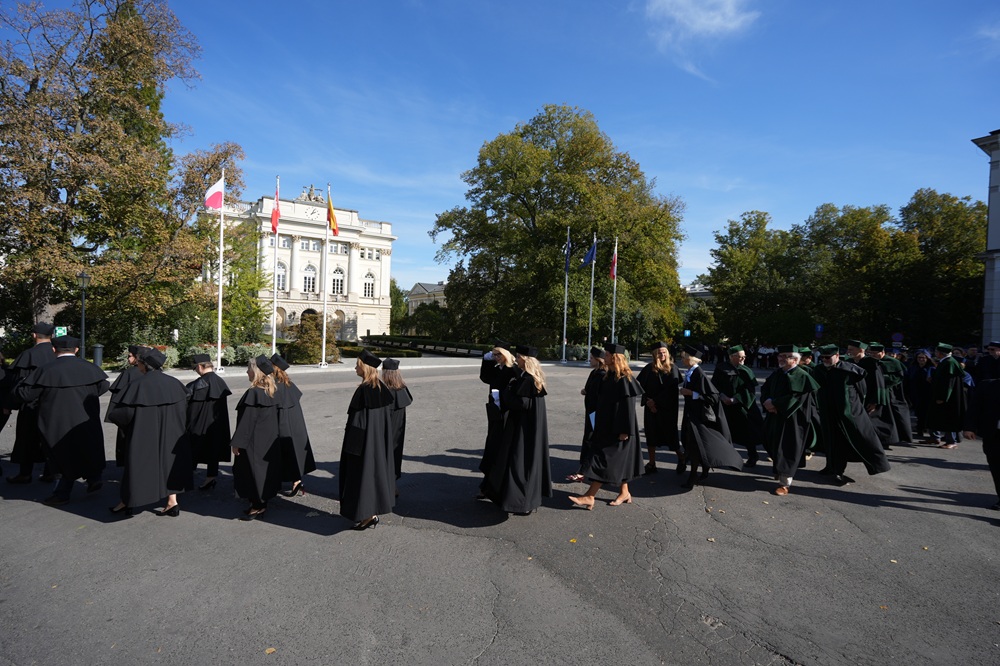
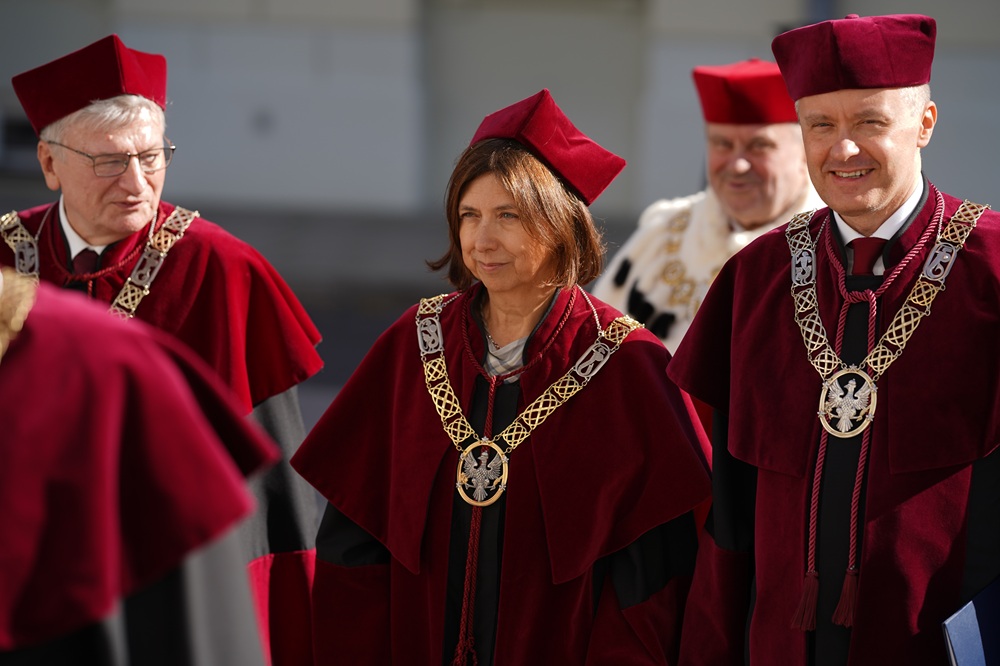
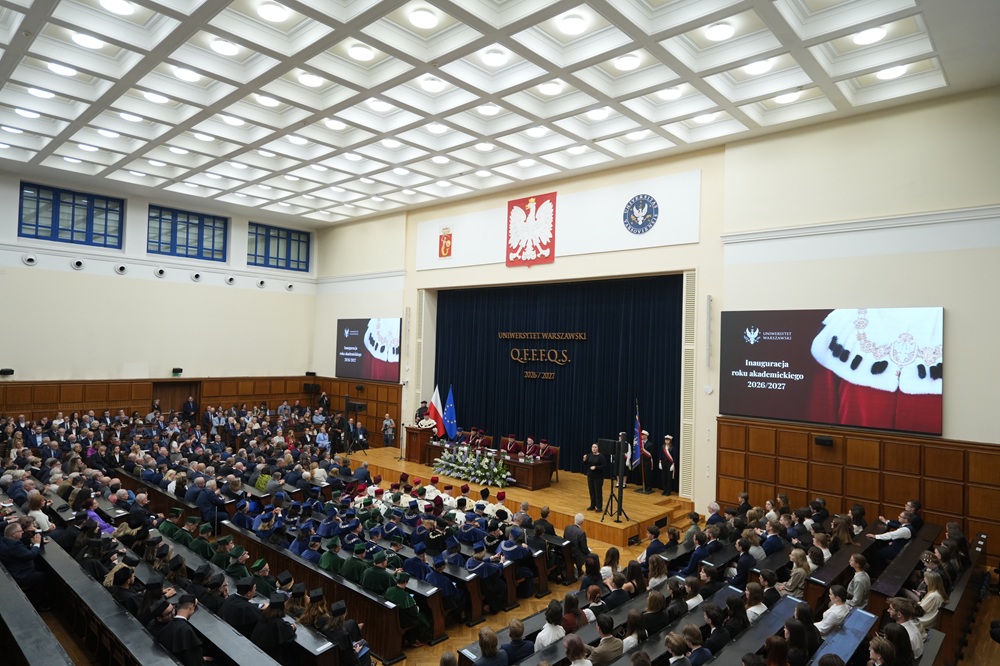
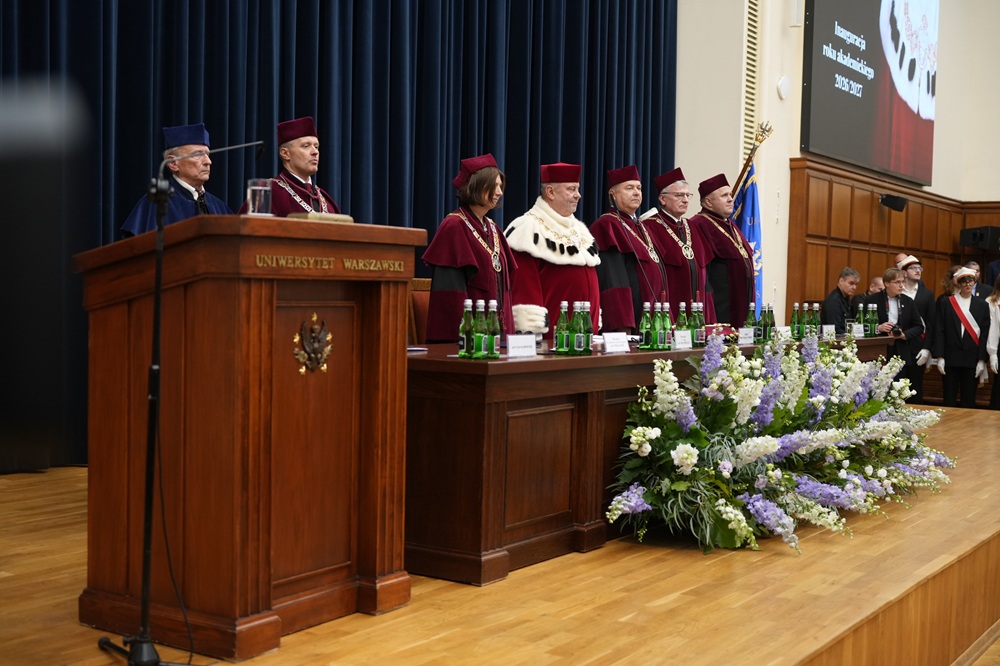
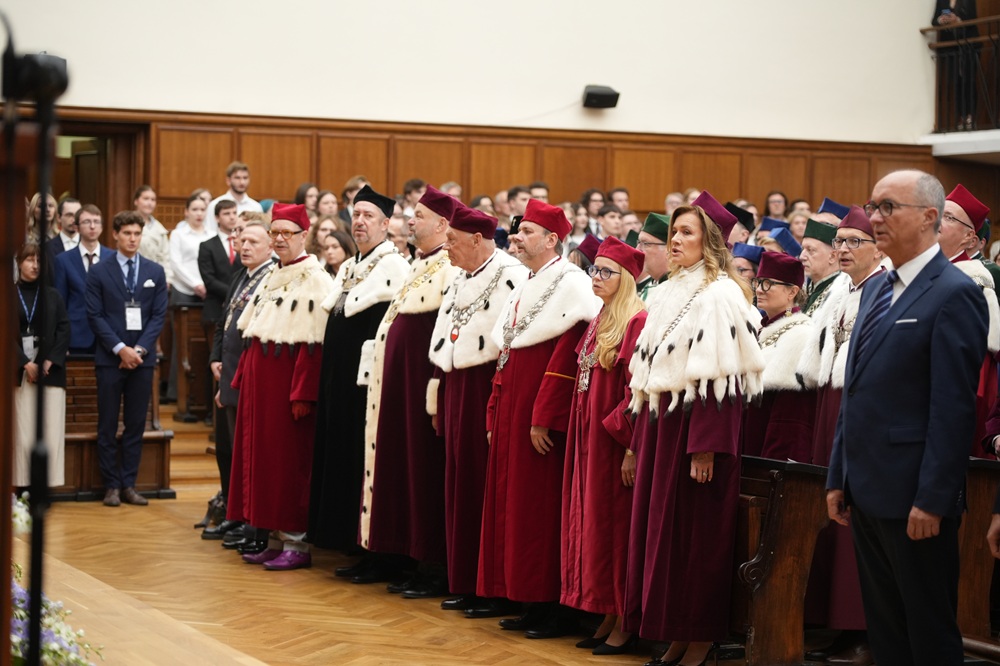
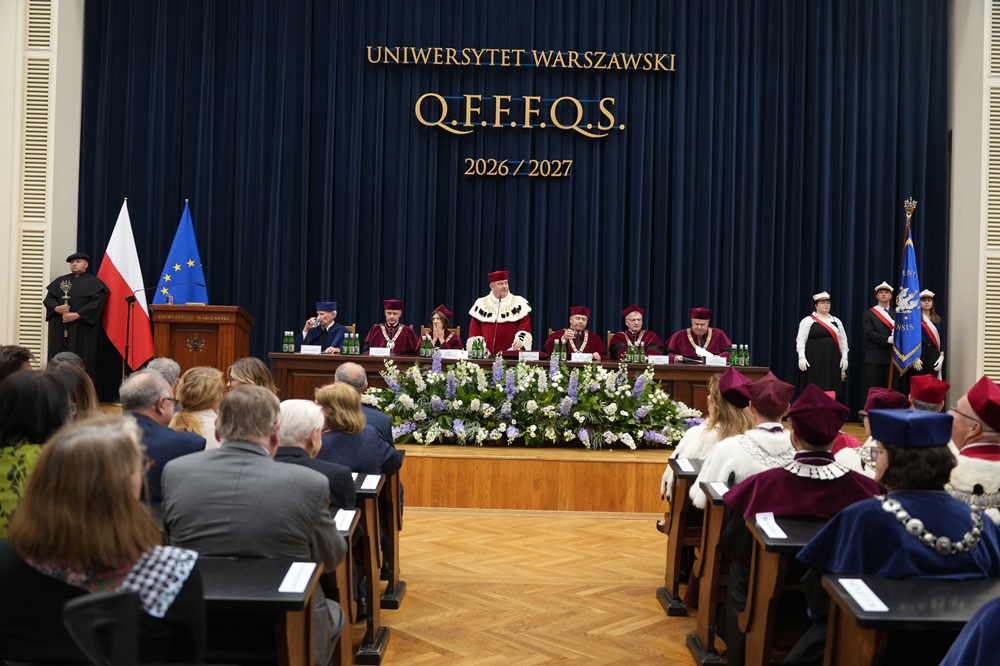
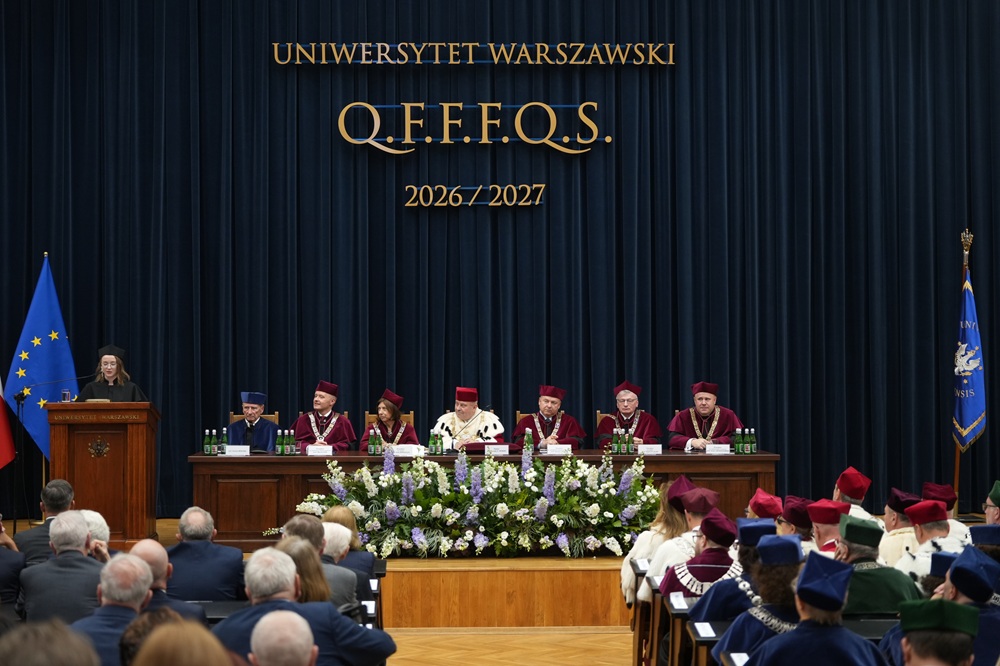
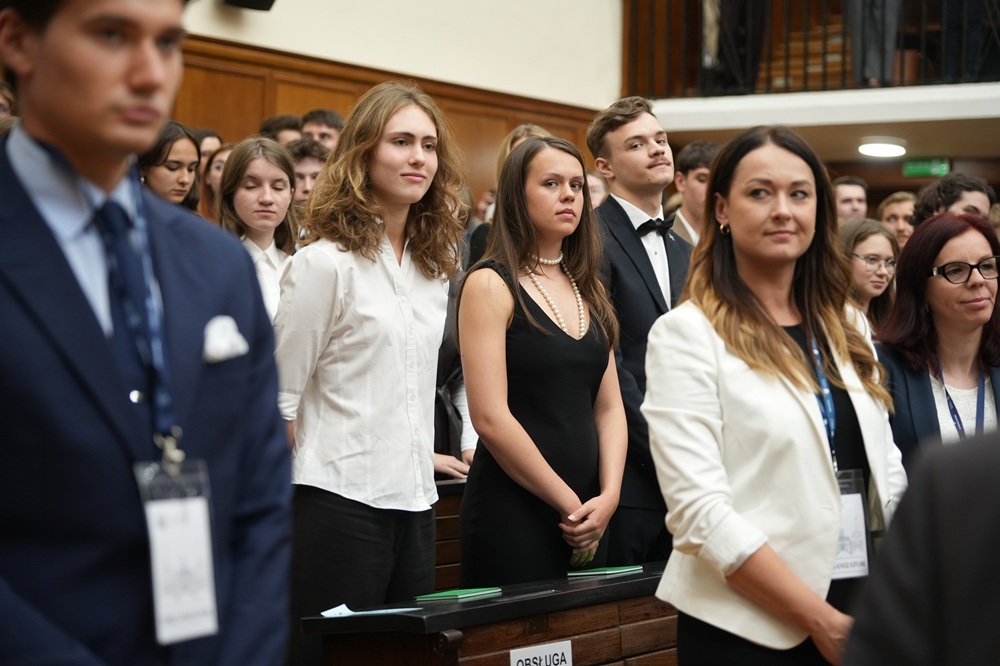
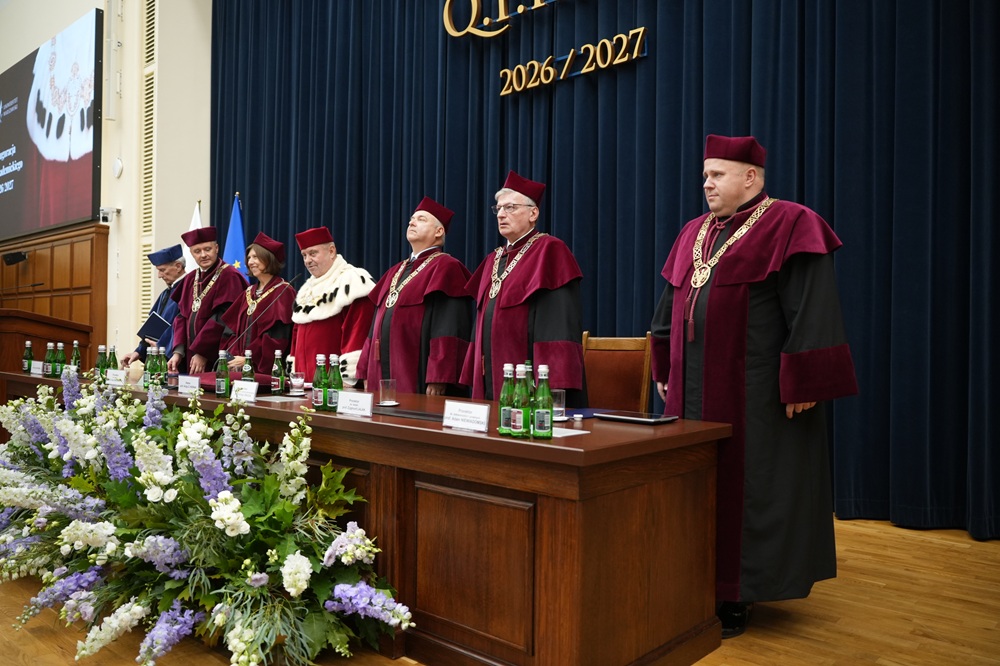
On 1st October at 2.00 pm, the opening ceremony for the 2026/2027 academic year began at the University of Warsaw. The traditional procession made its way from the Casimir Palace to the Auditorium Maximum, where, following the singing of the national anthems of Poland and the European Union, the ceremony was opened by the Rector, Prof. Alojzy Z. Nowak.
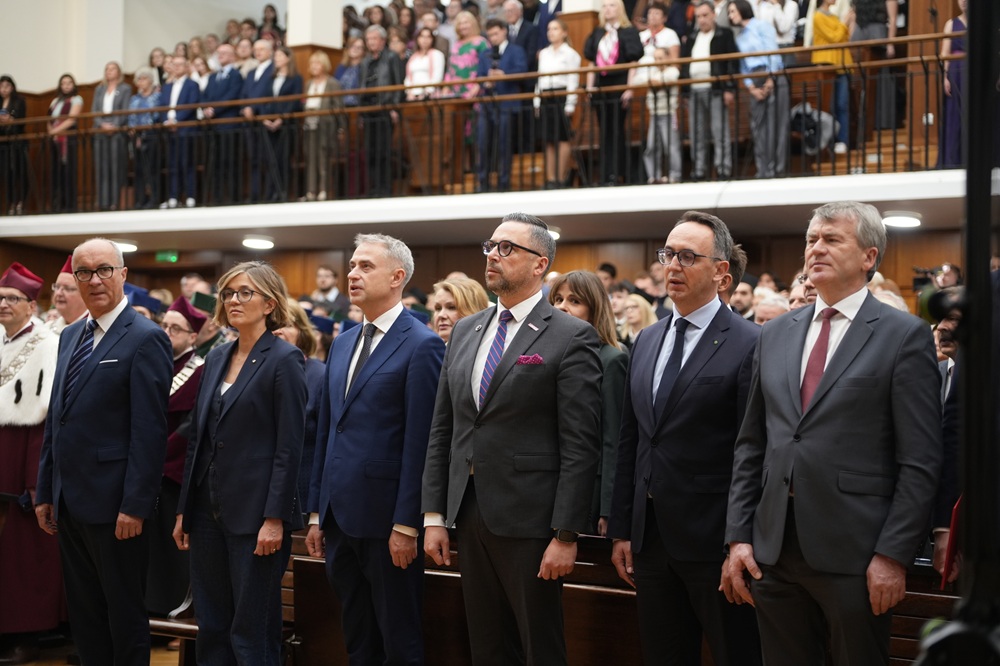
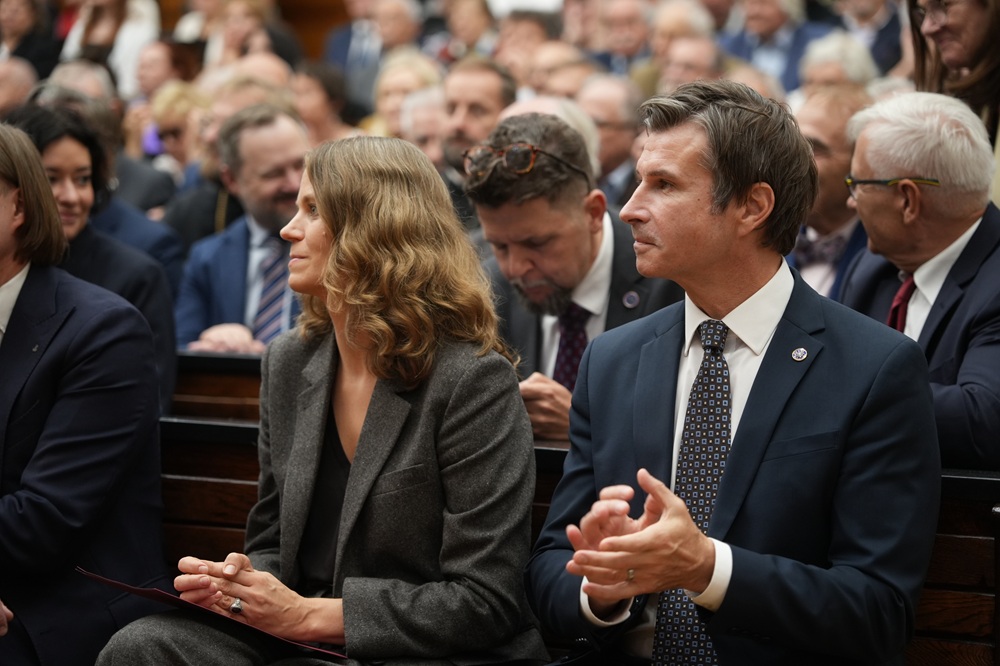
The event was attended by, amongst others: Włodzimierz Czarzasty, Marshal of the Sejm of the Republic of Poland; Magdalena Biejat, Deputy Marshal of the Senate of the Republic of Poland; Dr Krzysztof Gawkowski, Deputy Prime Minister and Minister for Digitalisation; Dr Marcin Kulasek, Minister for Science and Higher Education; Dariusz Klimczak, Minister for Infrastructure; Zbigniew Kapiński, First President of the Supreme Court, Jakub Banaszek, Adviser to the President of the Republic of Poland, Mariusz Frankowski, Voivode of the Masovian Voivodeship, Members of the Sejm, representatives of the Senate, the Ministry of Science and Higher Education and the Capital City of Warsaw, as well as Ambassadors Extraordinary and Plenipotentiary accredited to Poland and representatives of diplomatic missions.
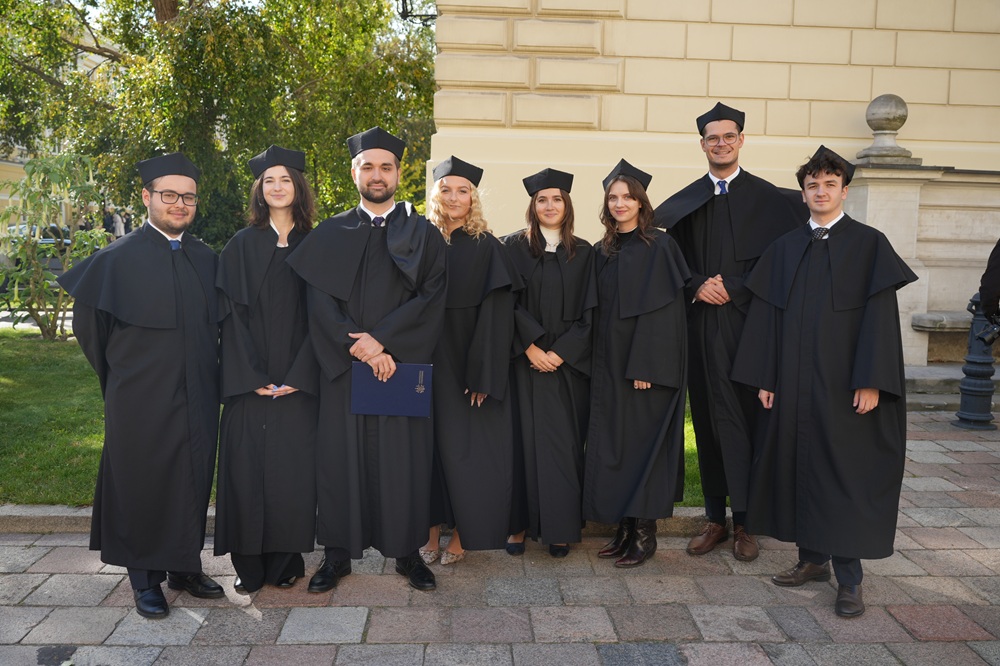
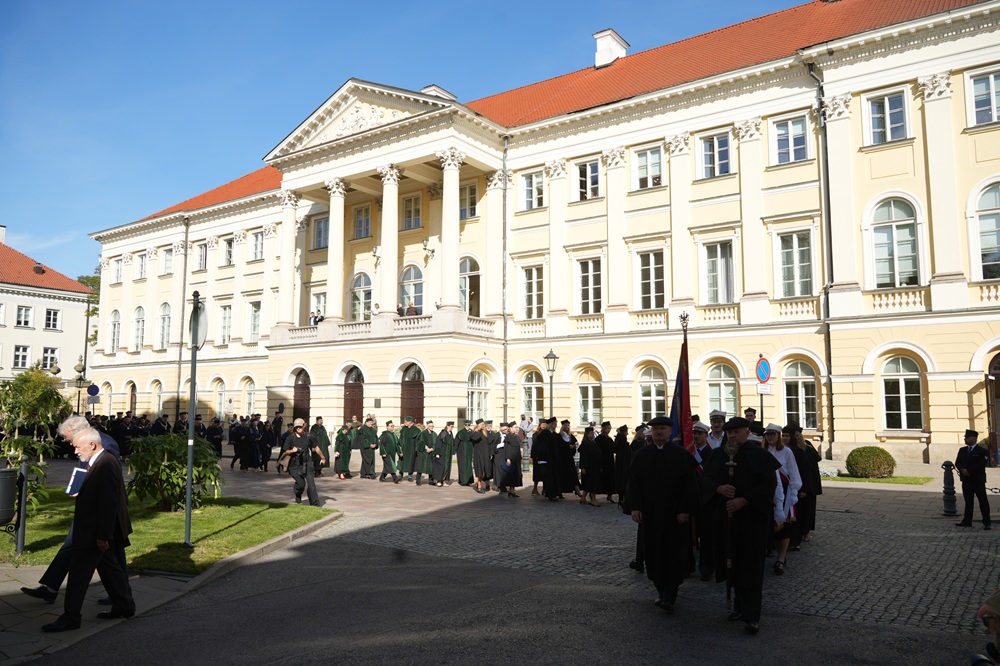
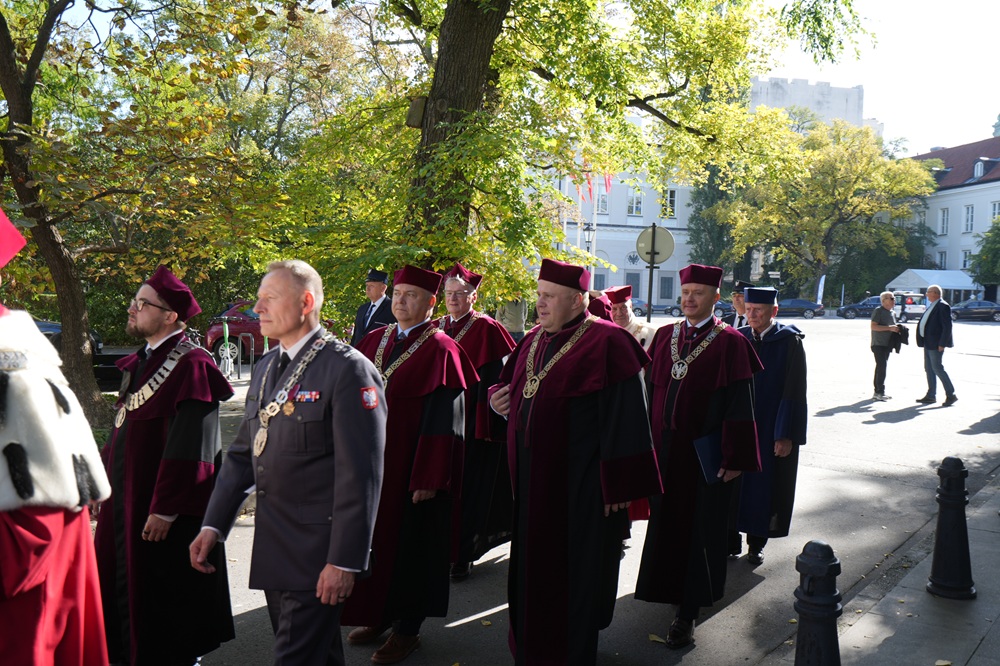
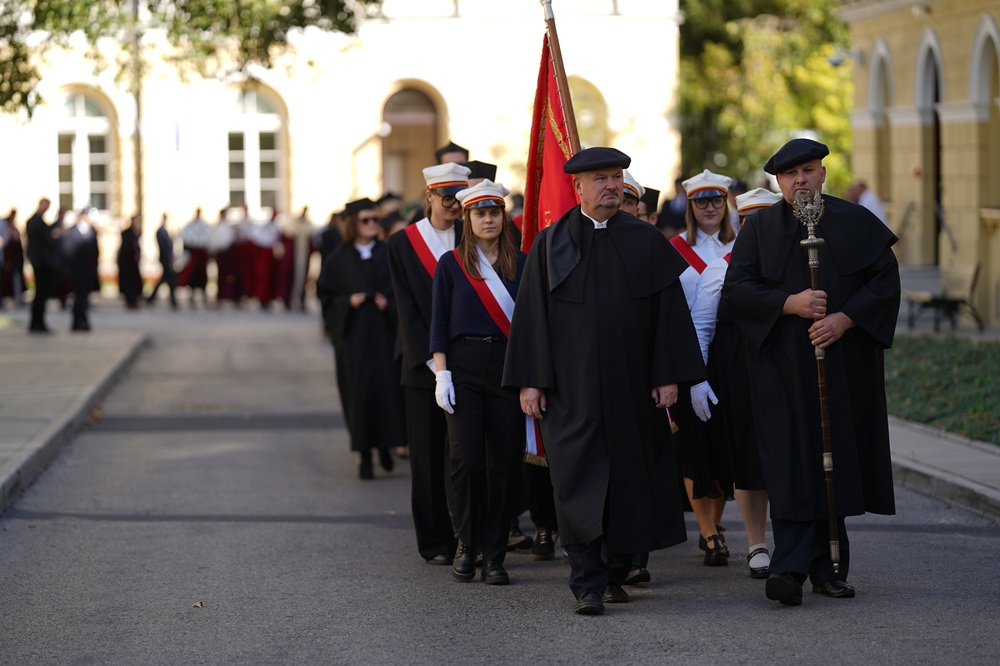
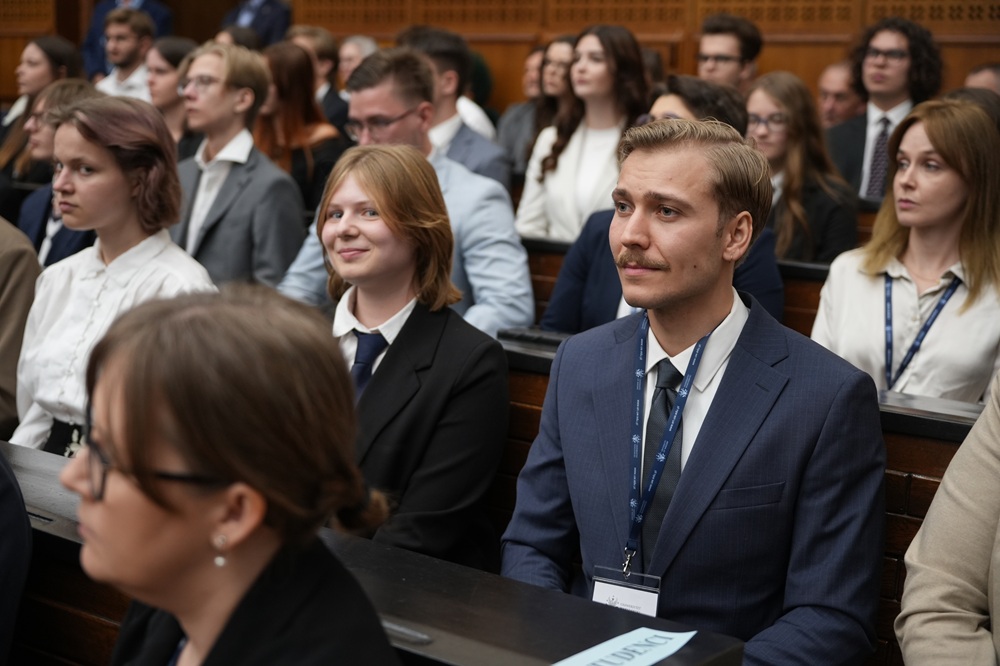
“You are the chosen ones. You are becoming part of the University of Warsaw, which educates over 40,000 students, doctoral candidates and postgraduate students, and hires over 8,000 employees. In this year’s admissions process, we received over 85,000 applications from more than 43,000 people. We have admitted over 20,000 students. This is a record result, which shows that what we do as a community is important and valued. We have a duty to show you all possible paths to development. Thanks to your hard work, you have a tremendous chance of success,” said the Rector, adding: “The most beautiful feature of the University of Warsaw, throughout its more than two centuries of existence, has been respect for one another. We are characterised by tolerance, openness and the pursuit of truth. Remember that no one here will ever restrict your freedom. However, it is important not to infringe upon the freedom of others in the process.”
A tremendous opportunity
Prof. Alojzy Z. Nowak emphasised that the University of Warsaw offers tremendous opportunities for development, particularly for its students and doctoral candidates. He referred to the recently published ranking by the Venture Capital Initiative at the Stanford Graduate School of Business, which lists the top 20 universities outside the US whose graduates completing master’s programmes go on to found the most “unicorn” companies in the United States – that is, private start-ups with a valuation exceeding one billion dollars. The University of Warsaw ranks seventh on the list – the only university from Poland to feature.
“The University of Warsaw’s strengths lie in research and high-quality teaching. These are essential pillars of the university’s activities, but nowadays the development of entrepreneurship and innovation is also a key area. We are building a vast community based, on the one hand, on cooperation between the best Polish research centres, and on the other, on relationships with the business sector, which supports science,” said the UW Rector.
The Rector emphasised that the University of Warsaw is collaborating with numerous institutions in Poland and abroad, including, for example, the Poland in Silicon Valley Centre for Science, Innovation, and Entrepreneurship, which acts as a bridge for knowledge, experience and resources between Polish institutions and Silicon Valley in the US.
“The world is developing at a very rapid pace. This is clearly illustrated by the example of artificial intelligence. Polish universities and educational institutions are training the most outstanding specialists in the field of AI. However, they most often take up employment abroad, for example in American corporations. There is nothing wrong with this, but we need to develop our own system that will enable our best graduates to flourish in Poland. It is essential to conclude appropriate agreements on this matter and to build up a solid financial foundation. Because we have enormous intellectual potential,” said Prof. Alojzy Z. Nowak.
The Rector also mentioned the UW’s interdisciplinary approach, which enables students to take courses across different faculties, as well as the university’s internationalisation and partnerships at both national and international levels. He pointed out that the university is currently implementing around 1,400 grants, thanks to which students also have the opportunity to gain additional knowledge, take part in international exchanges and develop in a well-rounded manner.
“You are joining a university that also fosters non-academic development. We have a thriving academic community, a rich cultural life, artistic groups, as well as student and doctoral self-governance, social initiatives and entrepreneurship. You can justifiably hope that, as members of the UW community, you are building a bright future for yourselves. The University offers you a tremendous opportunity to make a difference to the world,” said Prof. Alojzy Z. Nowak.
Speakers at the ceremony included: Dr Marcin Kulasek, Minister for Science and Higher Education; Mariusz Frankowski, Voivevod of the Masovian Voivodeship; and Jakub Banaszek from the Office of the President of the Republic of Poland.
“Today we are embarking on a new academic chapter: with fresh energy, new ambitions and the challenges posed by a rapidly changing world. And yet, we do so with the solid foundation of the academic tradition from which we all draw strength. This is a special day, but you, too, are a special community – that of the University of Warsaw, which is one of Poland’s most important centres of scholarship. Many outstanding researchers and public figures have come from here. Their achievements strengthen the university’s standing, but also contribute to the international standing of Polish science. And it has been this way for over 200 years,” said Minister Marcin Kulasek.
“These days, it is very important to talk about community. Here, at the University of Warsaw, where the plans, aspirations, hopes and dreams of tens of thousands of students, as well as members of the academic staff, intersect, there is a community with a powerful sphere of influence. What you learn here will have an impact not only on you, but also on those closest to you,” said the voivode, Mariusz Frankowski.
Jakub Banaszek, Adviser to the President of the Republic of Poland, read out a letter from the President: “The Presidential Palace and the main campus of the University of Warsaw are close neighbours on Krakowskie Przedmieście. This physical proximity also holds symbolic significance for me – it serves as a reminder that the state needs scholarship, and that a strong Republic of Poland also depends on the quality of its universities: on the knowledge they accumulate, the people they educate, and the freedom of thought they uphold. The history of the University of Warsaw bears particular witness to this.”
Formal matriculation ceremony
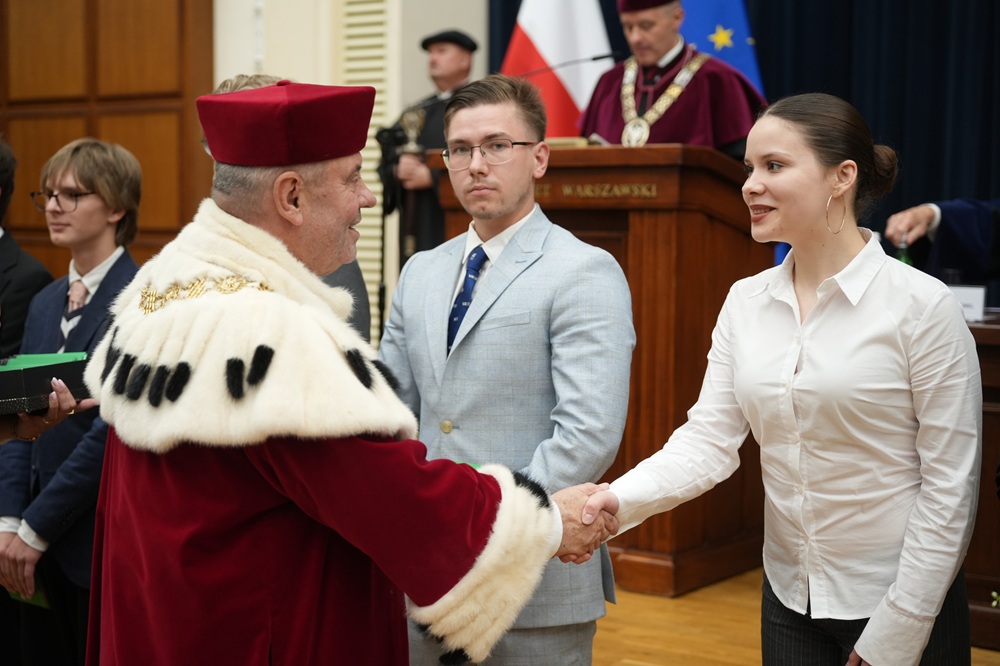
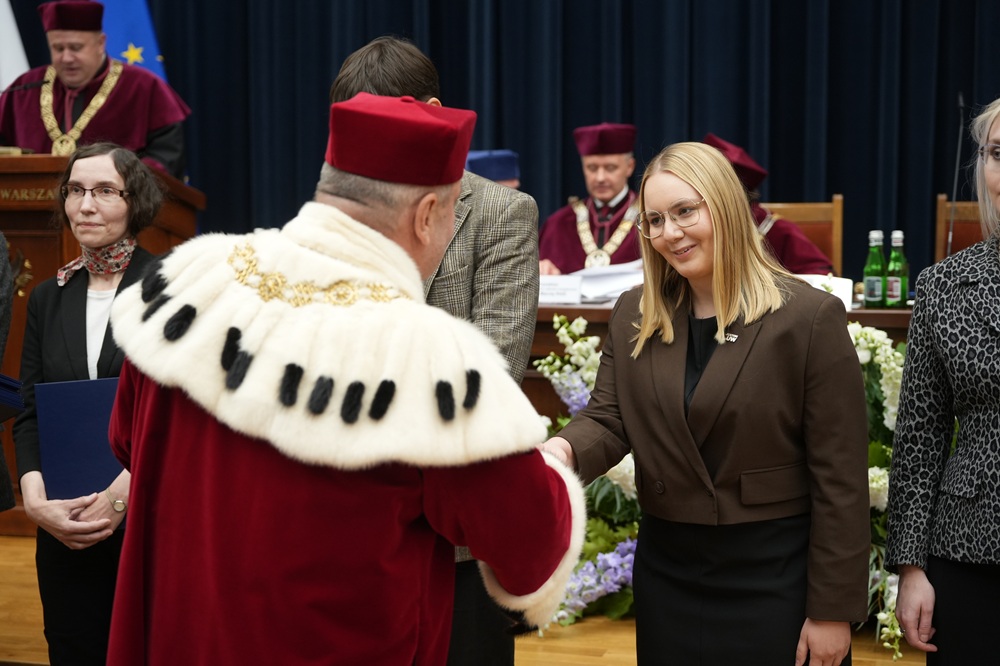
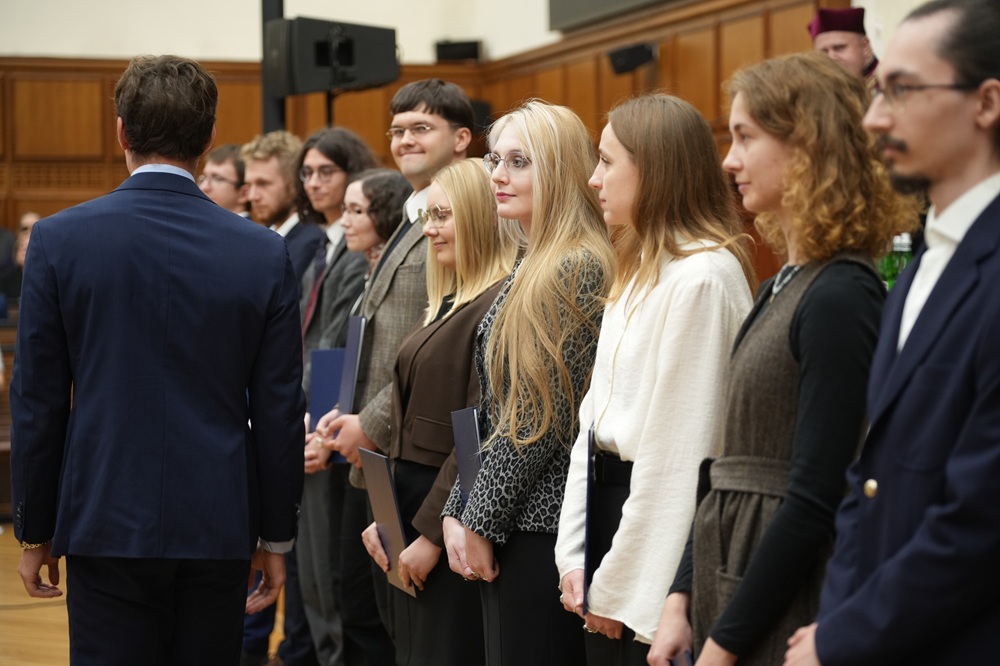
Following the Rector’s speech, the matriculation ceremony took place, marking the induction of new students and doctoral candidates into the university community. Students and doctoral candidates who had achieved the highest results in the admissions process took an oath and received their student record books from the Rector.
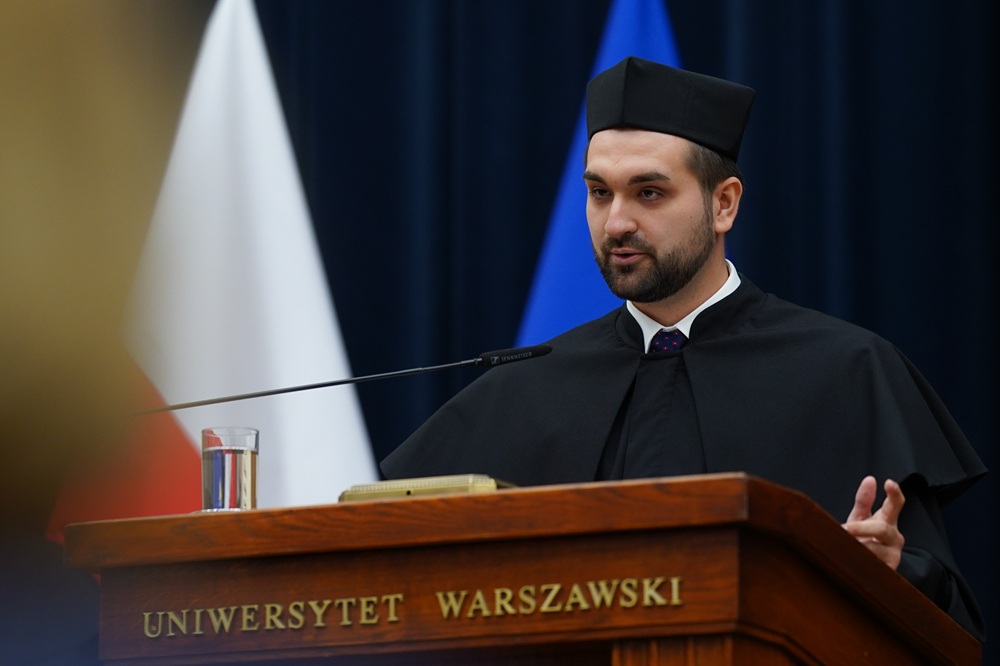
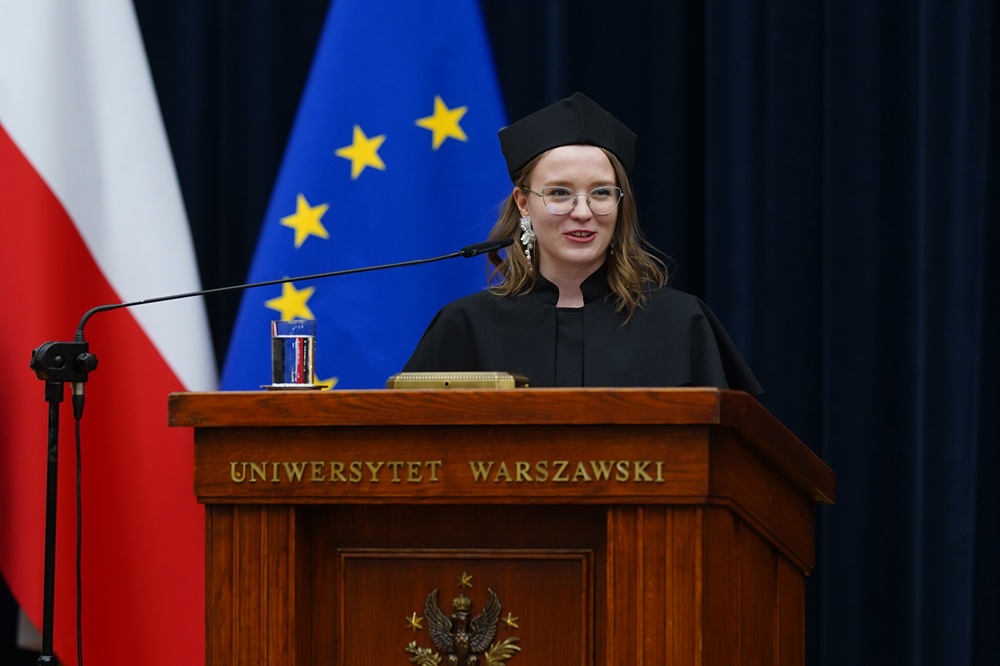
During the ceremony, Mateusz Mossakowski, Chair of the University of Warsaw Students’ Council, and Justyna Jaworska, Chair of the PhD Students’ Union, addressed the assembly.
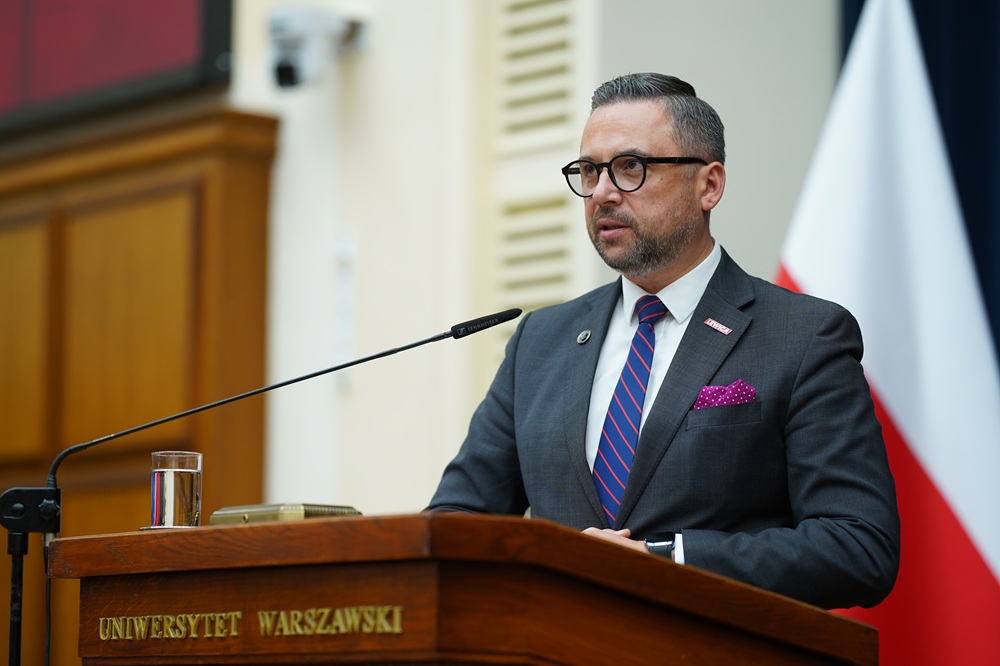
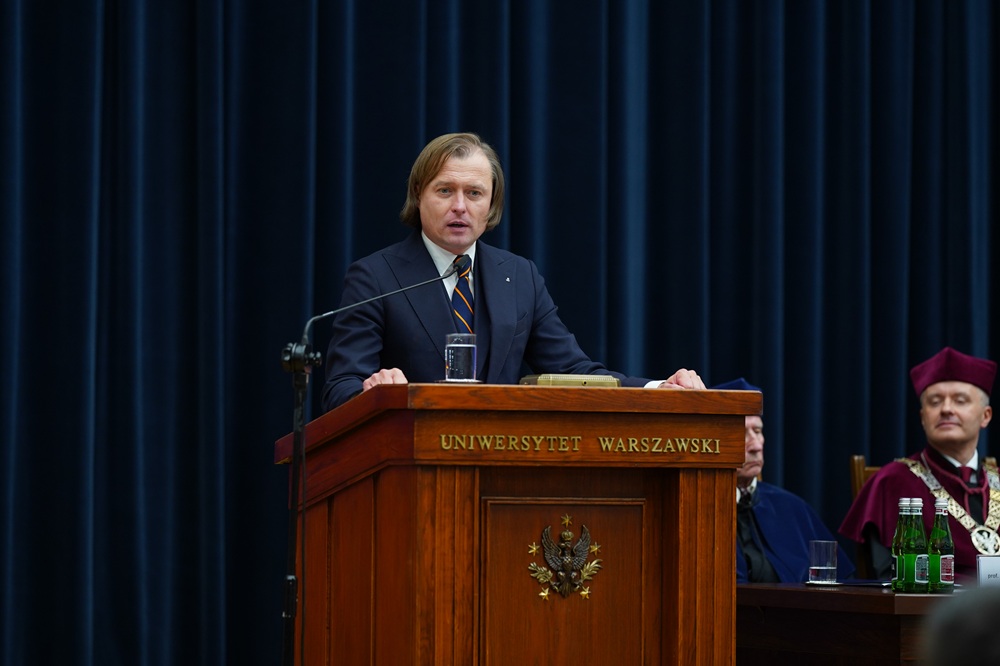
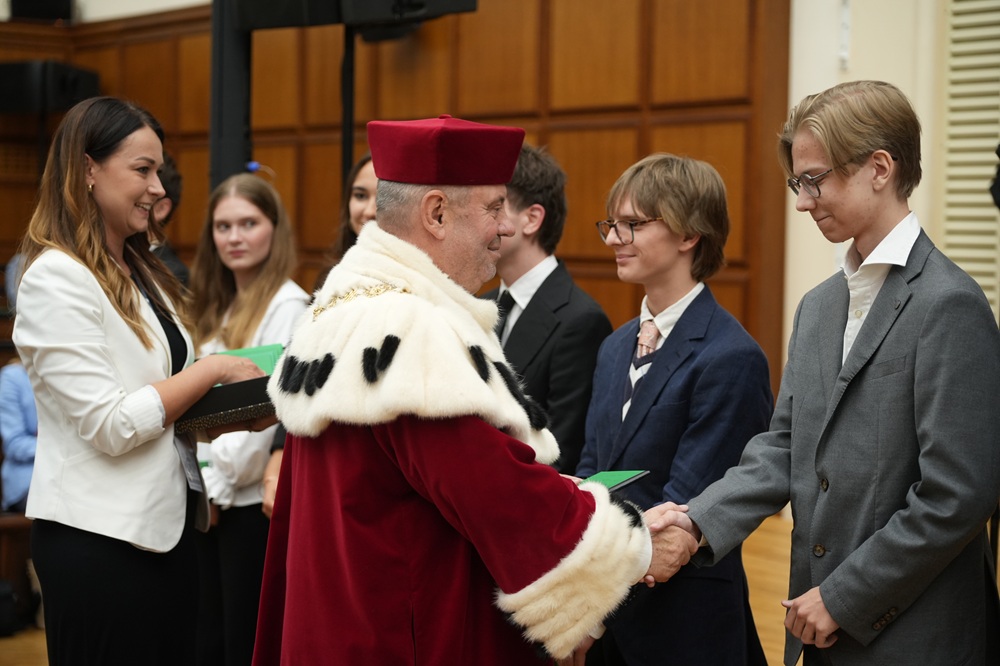
“Each of you has come to this hall driven by different motivations – the desire to broaden your knowledge, the ambition to gain qualifications so that you can pursue your dream career, the enthusiasm to explore your interests and satisfy your curiosity, or simply to obtain the bachelor’s or master’s degree you’ve been striving for. As you came here today, some of you were probably already imagining your future selves, diploma in hand, posing for photos at the University’s Main Gate. Whatever led you to where you are now in your lives, I want you to remember one thing – your choice was a good one, and indeed – and I can say this with absolute certainty – it was the best choice, because it has brought you right here to the University of Warsaw,” said Mateusz Mossakowski.
“For us, celebrating the start of the new academic year is something far more profound than merely observing a ritual. It is a clear expression of our passion, energy and voice – one that wants to be, and must be, heard. The University of Warsaw, as an institution that sets academic standards, demonstrates how to raise the profile of young researchers and how to provide them with the support necessary to fully develop their potential. I would like to take this opportunity to express my deep gratitude that our University is a place where these opportunities become a reality. To be part of such an extraordinary legacy, to draw upon it and to become its future is a tremendous honour for each and every one of us,” said Justyna Jaworska.
Giedroyc’s masterpiece
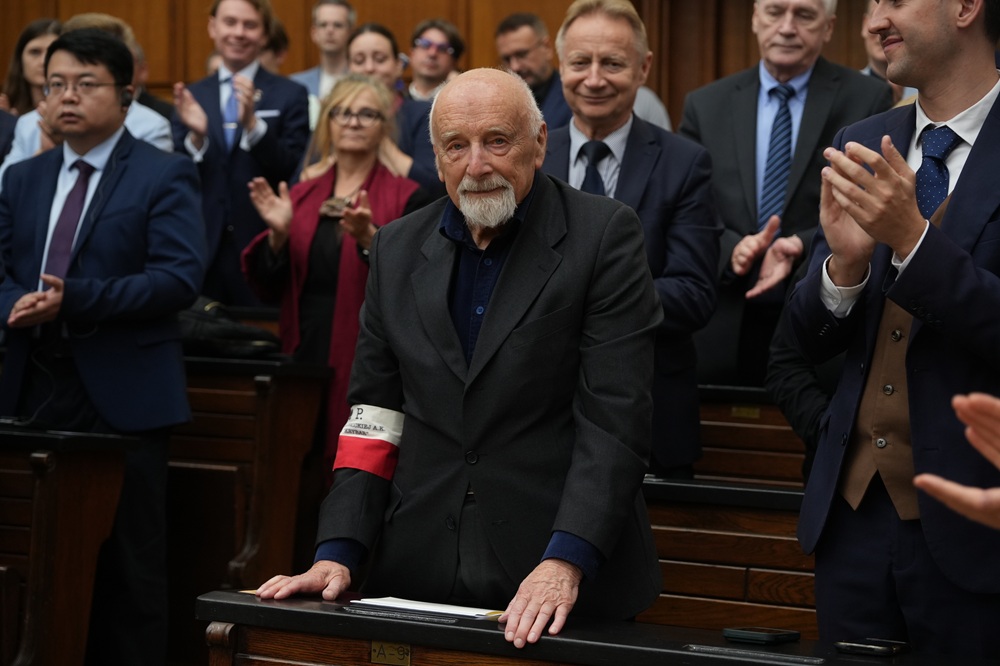
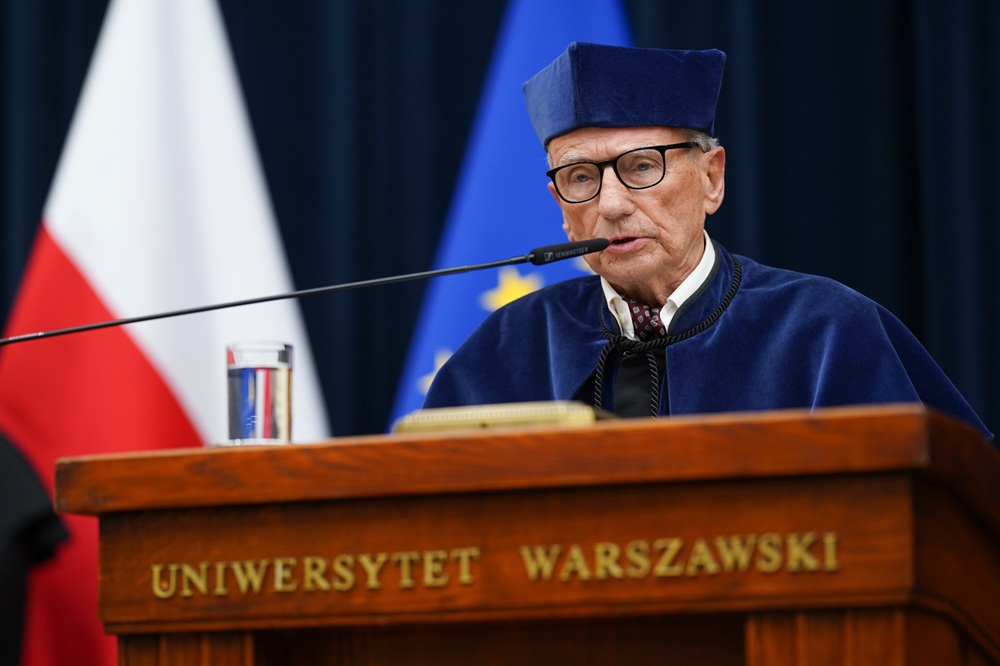
The inaugural lecture was delivered by Prof. Andrzej Mencwel – a historian of Polish culture, essayist and journalist, and emeritus professor at the Institute of Polish Culture within the UW’s Faculty of Polish Studies. He also lectured at the Aleksander Zelwerowicz Theatre Academy in Warsaw. He was a member of the UW Senate, a member of the Council of the Centre for Contemporary Art in Warsaw, the Programme Council of the “Zachęta” National Art Gallery, the Council of the National Centre for Culture, as well as a member of the Humanities Team at the Ministry of National Education (1995–2001), and subsequently its chair (2001–2011) and president of the Polish Society for Cultural Studies (2002–2007); since 2009, he has been its honorary president. He was awarded, amongst other honours, the Medal of the National Education Commission (2001), the Knight’s Cross of the Order of Polonia Restituta (2004), the Officer’s Cross of the Order of Polonia Restituta (2011), the University of Warsaw Medal (2006), the “Gloria Artis” Medal for Merit to Culture (silver) (2005), the University of Warsaw 200th Anniversary Medal (2016) and the Gold Medal of the Polish Success Academy (2017).
During his lecture, Prof. Andrzej Mencwel presented a profile of Jerzy Giedroyc – his political vision and the historical reality.
“During the Middle East campaign in 1943, despite the difference in their ranks, they were on very friendly terms, addressing each other by first name, and would sometimes have breakfast together. And it may well have been during such a gathering that Czapski managed to draw Giedroyc out of the ranks and make him his colleague. As soon as he met him and had a chat with him, he immediately realised that he had to recruit him. And he succeeded in doing so, for the next half-century. This was no happy coincidence, but a deliberate, personal encounter, reinforced by the appropriateness of words and deeds. Had it not taken place, the history of Poland and the world would have been deprived of a masterpiece, and we ourselves would have been sorely impoverished. This endeavour was initially titled “Literary Institute” (from February 1946), and was soon expanded to include the monthly magazine “Kultura”, the first issue of which appeared in June 1947. Today we know that neither the Literary Institute nor “Kultura” would have come into being on the historical scale that was achieved and established had it not been for that meeting between Józef Czapski and Jerzy Giedroyc, and their unparalleled collaboration and mutual friendship. Forged in the Iraqi desert, probably near Mosul, in mid-1943,” said Prof. Andrzej Mencwel.
The ceremony marking the start of the academic year concluded with a joint rendition of “Gaudeamus Igitur”.
A recording of the broadcast of the inauguration ceremony for the 2026/2027 academic year at the University of Warsaw is available on the UW YouTube channel: