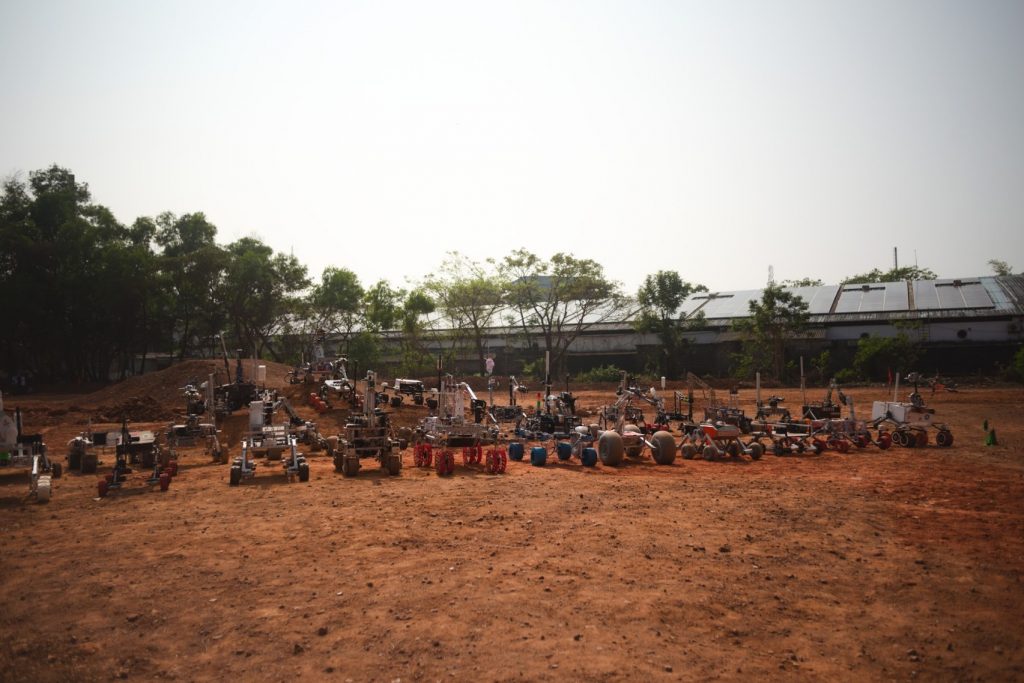

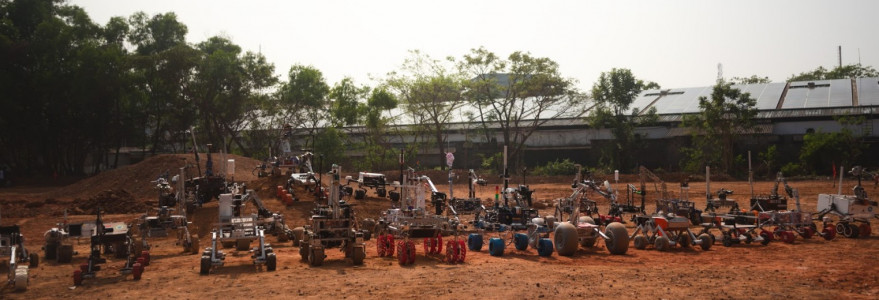
Students from the University of Warsaw won the Emerging Team of the Year Award and took 8th place in the overall classification during the International Rover Challenge 2026, an international Mars rover competition held in India. Over 30 academic teams from around the world took part in the competition.
The International Rover Challenge is one of the most renowned robotics competitions worldwide, bringing together over 30 academic teams from across the globe. The challenge involves the design, construction, and testing of autonomous Mars rovers that must complete tasks inspired by real space missions. The UW team placed 8th in the overall ranking and won the prestigious Emerging Team of the Year trophy.
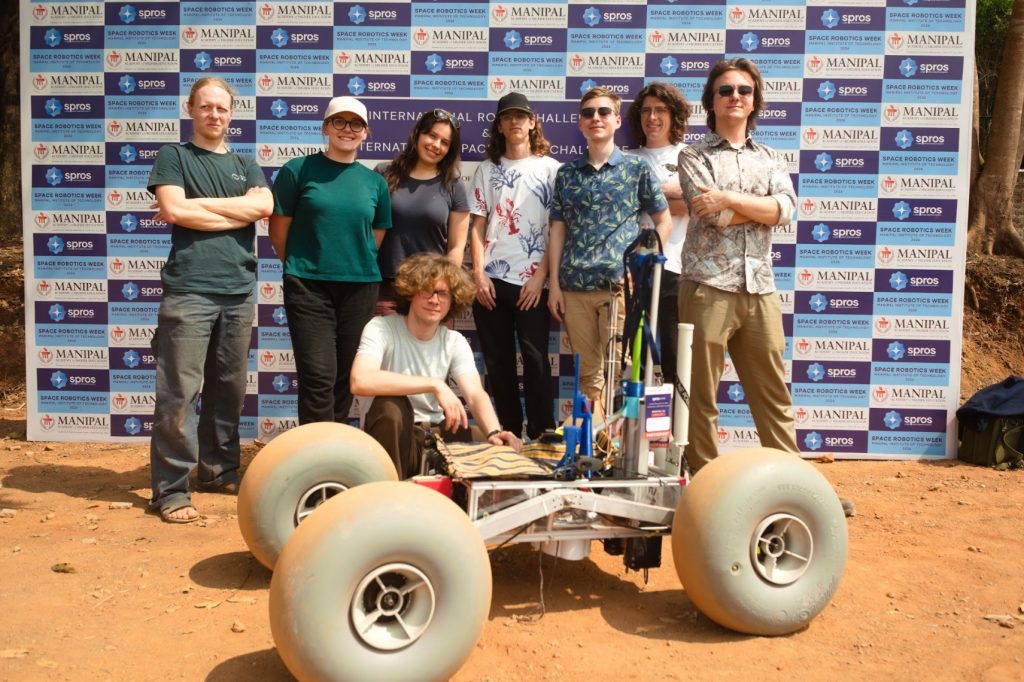
The University was represented by an eight-member team from the UW Robotics and Automation Student Association, composed of students from the Faculty of Physics, the Faculty of Mathematics, Informatics and Mechanics, and the College of Inter-faculty Individual Studies in Mathematics and Natural Sciences (MISMaP). The team members were: Mateusz Kamiński (team captain), Michał Birecki, Joanna Mali, Piotr Maksymiuk, Oliwier Matysek, Filip Nogaj, Korneliusz Obarski, and Zuzanna Ossowska.
“The experience from the competition was truly great. The International Rover Challenge was not only an extremely interesting experience for us, but also a very solid test of our rover. In everyday university conditions, it is difficult to fully test all its functions in realistic environments, such as driving over challenging terrain, operating the robotic arm, or using soil analysis modules. In India, we had the perfect opportunity to do so,” says Mateusz Kamiński, team captain and physics student within the MISMaP College.
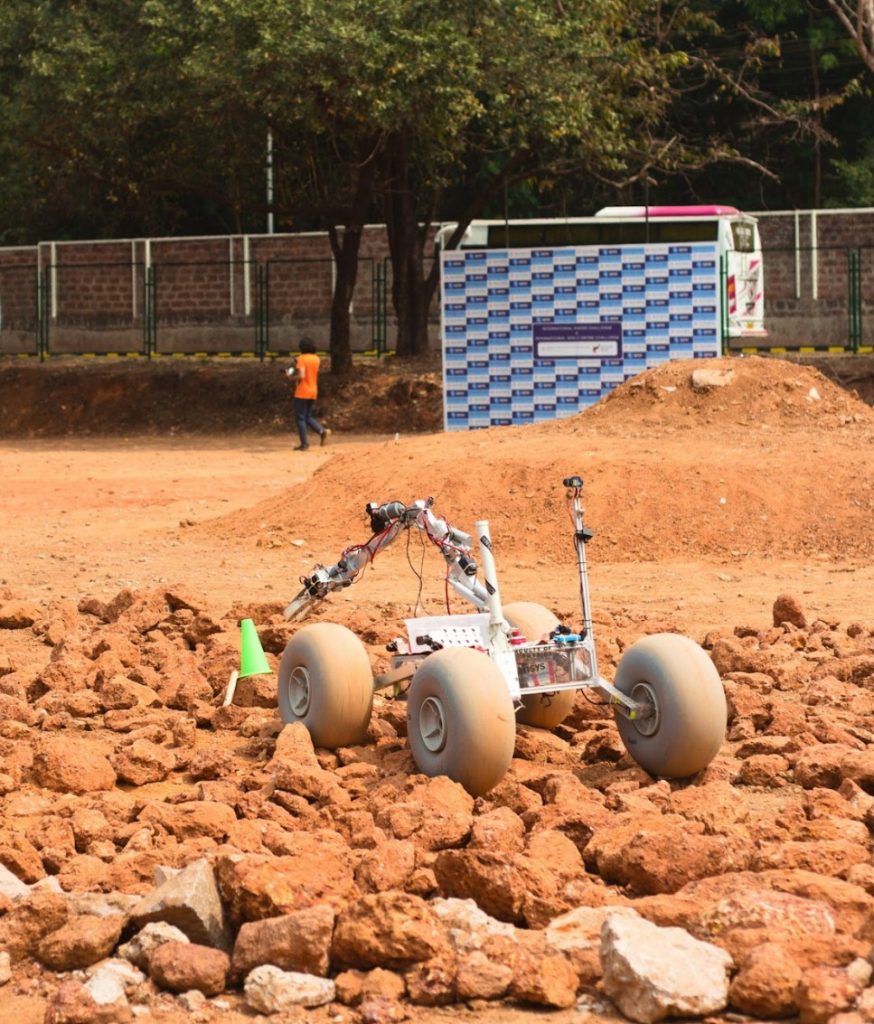
The competition consisted of four main challenges. The first involved remotely operating a special control panel using the rover’s manipulator, based solely on camera footage. The second task required navigating a vast “Martian” terrain with obstacles, locating distributed tools, and transporting them to designated locations. The third challenge focused on terrain exploration, including not only visual inspection but also soil analysis, moisture measurement, and sample collection to assess potential conditions for life on Mars. The final stage was a team presentation, during which students presented the team’s organisation, approach to promotion and sponsor acquisition, as well as the entire process of designing, building, and testing the rover.
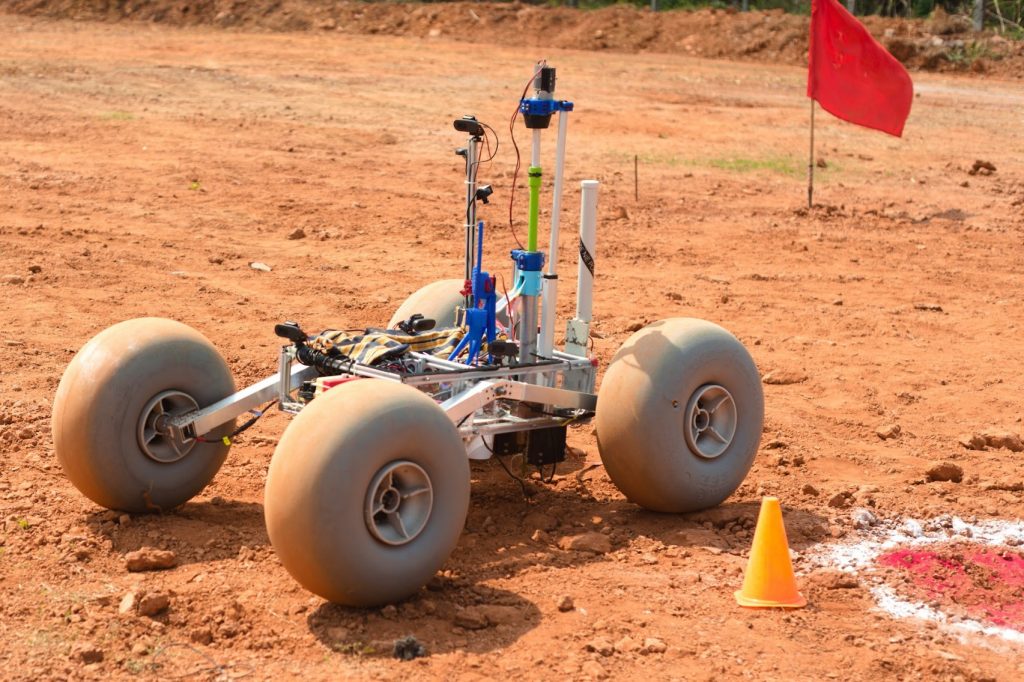
The team achieved its best results in the terrain reconnaissance task, thanks to the use of an innovative suspension system and unconventional wheels. This allowed the UW rover to overcome all obstacles that posed difficulties for other vehicles.
More information is available on the UW Faculty of Physics website – fuw.edu.pl >>