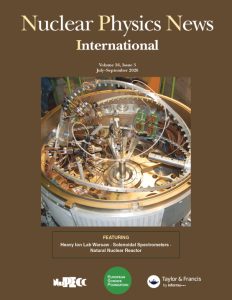


An article published in the international journal “Nuclear Physics News” summarises more than three decades of development at the University of Warsaw’s Heavy Ion Laboratory. The authors present the centre’s most significant achievements, the development of the Warsaw cyclotron and research equipment, as well as the centre’s activities in the fields of nuclear physics, radiobiology, nuclear medicine, international cooperation and student education.
The Heavy Ion Laboratory has been operating at the University of Warsaw since 1979. It is the country’s only experimental centre for nuclear physics equipped with a heavy-ion cyclotron and modern spectrometers, enabling research into the structure of the atomic nucleus and nuclear reactions.
News of the establishment of the HIL three decades ago was published in the journal Nuclear Physics News. More than 30 years on, it is once again featuring this university unit, this time highlighting the scale of the changes that have taken place since it first opened.
30 years of development
The laboratory develops various technologies relating to the acceleration of charged particles, the detection of nuclear radiation and the medical applications of nuclear physics. The unit produces the radiopharmaceuticals required for PET diagnostics and also organises training courses for students from universities in Poland and abroad.
Since the last publication, both the cyclotron itself and its experimental facilities have been modernised. The original ion source has been replaced by modern ECR sources; high-frequency circuits and beam focusing systems have been developed; and simple measurement set-ups have been replaced by advanced multi-detector systems.
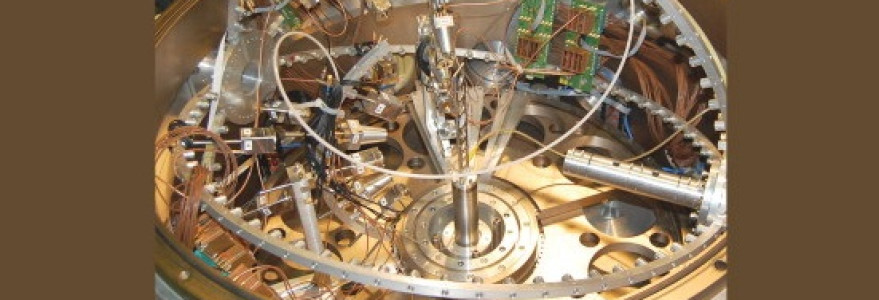
One of the most important research tools at the HIL UW is currently the EAGLE gamma-ray spectrometer, used for precise studies of atomic nuclei. In recent years, its capabilities have been further expanded through collaboration with the NEDA and DIAMANT systems and the digitisation of data acquisition systems. The experiments conducted in Warsaw enable the study of nuclear shapes, their excited states and the mechanisms of nuclear reactions.
A significant part of the unit’s activities also involves research at the interface between physics, biology and medicine. The laboratory’s infrastructure enables radiobiological experiments to be carried out using heavy-ion beams, as well as the study of their effects on cells and biological material. The development of this work is part of the increasingly widespread use of nuclear physics methods in medicine.
Another important milestone was the commissioning in 2012 of the PETtrace cyclotron, which forms the basis of the activities of the UW’s Centre for Radiopharmaceutical Production and Research. This infrastructure enables the production of radiopharmaceuticals used in PET diagnostics, as well as research into new medical isotopes and solutions in the field of theranostics.
The article in Nuclear Physics News also highlighted the importance of the laboratory’s international scientific collaboration and its teaching activities. For years, Polish and international research teams have been using its facilities, whilst students take part in workshops and experiments utilising real equipment and measurement data.
Publication:
Paweł J. Napiorkowski, Jarosław Choiński, Giulia Colucci, Urszula Kaźmierczak, Krzysztof Kilian, Marcin Palacz, Katarzyna Wrzosek-Lipska, “The Heavy Ion Laboratory in Warsaw: Thirty Years After the First Beam”, Nuclear Physics News.