
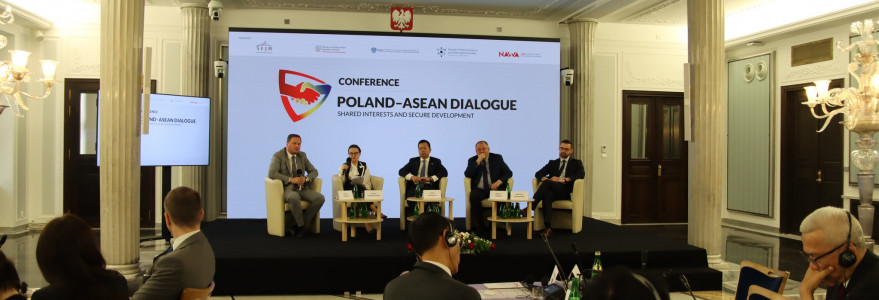
The potential for cooperation between Poland and the Association of Southeast Asian Nations (ASEAN) – comprising 11 countries and 700 million citizens – is enormous. Participants at the “Poland-ASEAN Dialogue” conference, organised at the Sejm of the Republic of Poland in cooperation with the University of Warsaw, discussed economic, political, and social opportunities, as well as those related to strengthening security. One of the panelists was Prof. Alojzy Z. Nowak, the UW Rector.
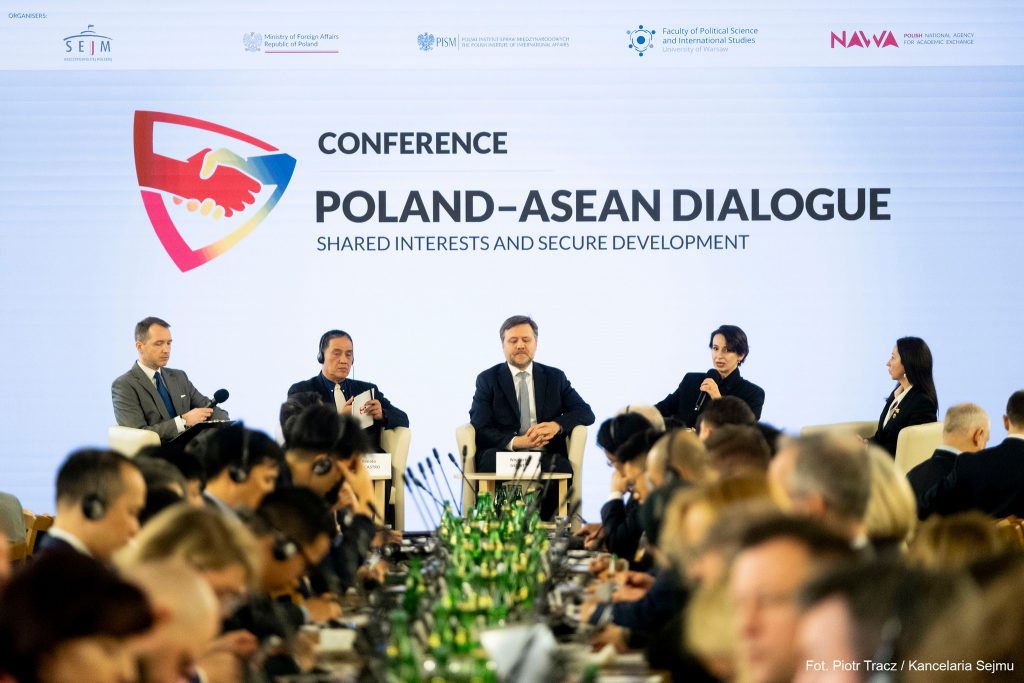
Held on 23rd March at the Sejm under the theme “Poland-ASEAN Dialogue: A Community of Interests and Secure Development”, the event served as a forum for exchanging knowledge and experiences regarding Poland’s cooperation with the Association of Southeast Asian Nations (ASEAN). Representatives of the University of Warsaw, including Rector Prof. Alojzy Z. Nowak, also participated in the event.
“Poland and ASEAN are a force for peace, without which there can be no development. This means jointly building maritime security, the defense industry, and resilience against hybrid threats. It offers a range of opportunities for science and progress. Today, in a world of growing rivalry among major powers and numerous geopolitical upheavals, stability is needed more than ever before,” said MP Grzegorz Napieralski, chairman of the Polish-Vietnamese Parliamentary Group, as he opened the conference.
The opening remarks were delivered by Radosław Sikorski, Deputy Prime Minister and Minister of Foreign Affairs: “In the face of uncertainty in the international environment, it is particularly important to identify reliable partners, communities of interests, and actions that create opportunities for safe development for as many actors as possible. Poland recognises a community of values and goals with ASEAN countries.”
Security, economy, academia
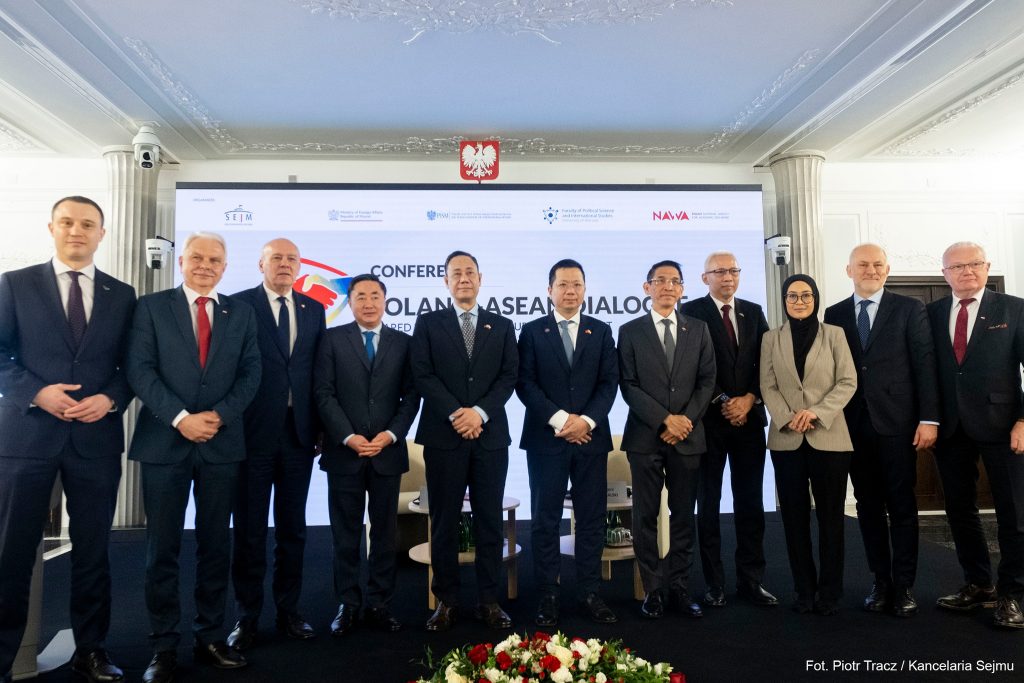
The first part of the event featured speeches by ASEAN ambassadors accredited to Poland: Ha Hoang Hai (Ambassador of the Socialist Republic of Vietnam), Alan Lazaro Deniega (Ambassador of the Republic of the Philippines), Thyra Chheang (Ambassador of the Kingdom of Cambodia), Sira Swangsilpa (Ambassador of the Kingdom of Thailand), Agus Heryana (Chargé d’Affaires, Embassy of the Republic of Indonesia), and Nur Zaitie Suhana Zakaria (Chargé d’Affaires a.i., Embassy of Malaysia).
The conference was divided into three panels, during which participants discussed security challenges, economic cooperation in times of global uncertainty, and academic networks as a tool for cooperation.
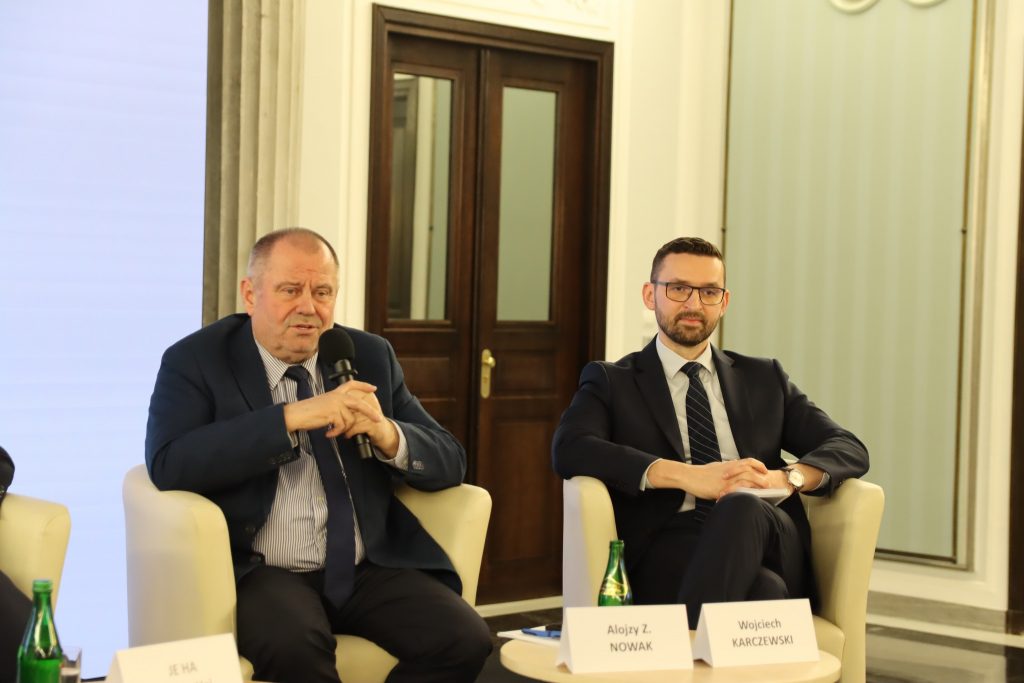
During the latter event, which was attended by Prof. Alojzy Z. Nowak, the UW Rector, the topic of academic diplomacy as a form of soft power and an element of Poland’s foreign policy was discussed. The panellists also talked about the role of internationalisation, innovation, and the evolution of the university model in the modern world.
The UW Rector emphasised the importance of intensifying cooperation with the countries of South-East Asia: “Asia is playing an increasingly significant role in the world. For several years now, young people from Poland have shown an interest in studying mainly in the Far East. This means universities must now devote more attention to research and academic exchange with these countries.”
Prof. Alojzy Z. Nowak added that the academic model has changed significantly in recent years.
“Today’s universities – alongside teaching, conducting research and fulfilling their third mission – also recognise the importance of fostering entrepreneurship. We are successfully establishing start-ups and spin-offs, and we aim to expand our collaboration with the business sector and create large research and business centres. Examples of good cooperation in this area include the 4EU+ Alliance and the Poland in Silicon Valley Centre for Science, Innovation, and Entrepreneurship, of which the University of Warsaw is a co-founder,” said Prof. Alojzy Z. Nowak.
Dr Katarzyna Nawrot from the UW’s Faculty of Political Science and International Studies was a participant of the security panel.
“At this extremely important time – the reconfiguration of the international relations system and the geopolitical shift in the balance of power – we see a very strong link between the economy and politics. The economy is becoming a derivative of politics. Consequently, in the international sphere, trade policy should no longer focus so much on achieving economic gains, but rather on building security, including economic security. In the context of relations between Poland and the ASEAN countries, I would highlight three specific issues: the importance of supporting liberal solutions, the need to diversify cooperation in both economic and political terms, and the search for non-obvious areas and instruments for cooperation of this nature,” said Dr Nawrot.