

The results of research conducted at the Heavy Ion Laboratory have been published in the journal “Physics Letters B”. The dilemma between two different descriptions of the structure of cadmium nuclei has been resolved.
In the 1950s, Aage Niels Bohr and Ben R Mottelson proposed a collective model of the atomic nucleus, according to which the low-lying excited states of atomic nuclei are associated with the coordinated motion of protons and neutrons. This model was widely accepted by the nuclear physics community, and its authors were awarded the Nobel Prize in 1975. Collective excitations of atomic nuclei can be compared to the movement of fans during a football match: each of them can stand up and move independently of the others (like individual protons and neutrons moving from one orbital to another), but they can also join together to form a “wave” moving around the stadium, which is a collective phenomenon.
Collective behaviour
In atomic nuclei, collective behaviour takes the form of rotational motion or oscillations involving many or even most of the nucleons. Cadmium (Cd) isotopes have played a key role in research into collective excitations in atomic nuclei for over 40 years. Initially, it was thought that their structures could be described within the framework of a collective vibrational model, in which the atomic nucleus performs small oscillations (vibrations) around a spherical equilibrium shape.
Subsequent experimental results inspired new calculations using advanced theoretical models of the atomic nucleus, according to which the individual excited states in the 110Cd and 112Cd atomic nuclei assume various ellipsoidal shapes (e.g. elongated like a rugby ball or a courgette, or flattened like a frisbee or a pumpkin). On the other hand, alternative theoretical approaches developed in parallel are able to reconcile the existing experimental data for these nuclei with their practically spherical shape.
Recent experiments conducted at the Heavy Ion Laboratory UW have made it possible to resolve the discrepancy between these two fundamentally different descriptions of the structure of cadmium nuclei. This was achieved by determining the shapes of two key states in the 110Cd nucleus.
Both the ground state and the excited 0+ state deviate from a spherical shape; the former, in particular, resembles a kiwi fruit (or an ellipsoid in which all axes are of different lengths). Furthermore, the measured quadrupole moments (i.e., the parameters of the charge distribution) of the two lowest spin-2 states are significantly different from zero, which contradicts the hypothesis that the structure of these nuclei might result from their oscillations around a spherical shape. These results formed the basis of a paper published in the journal “Physics Letters B”.
International research programme
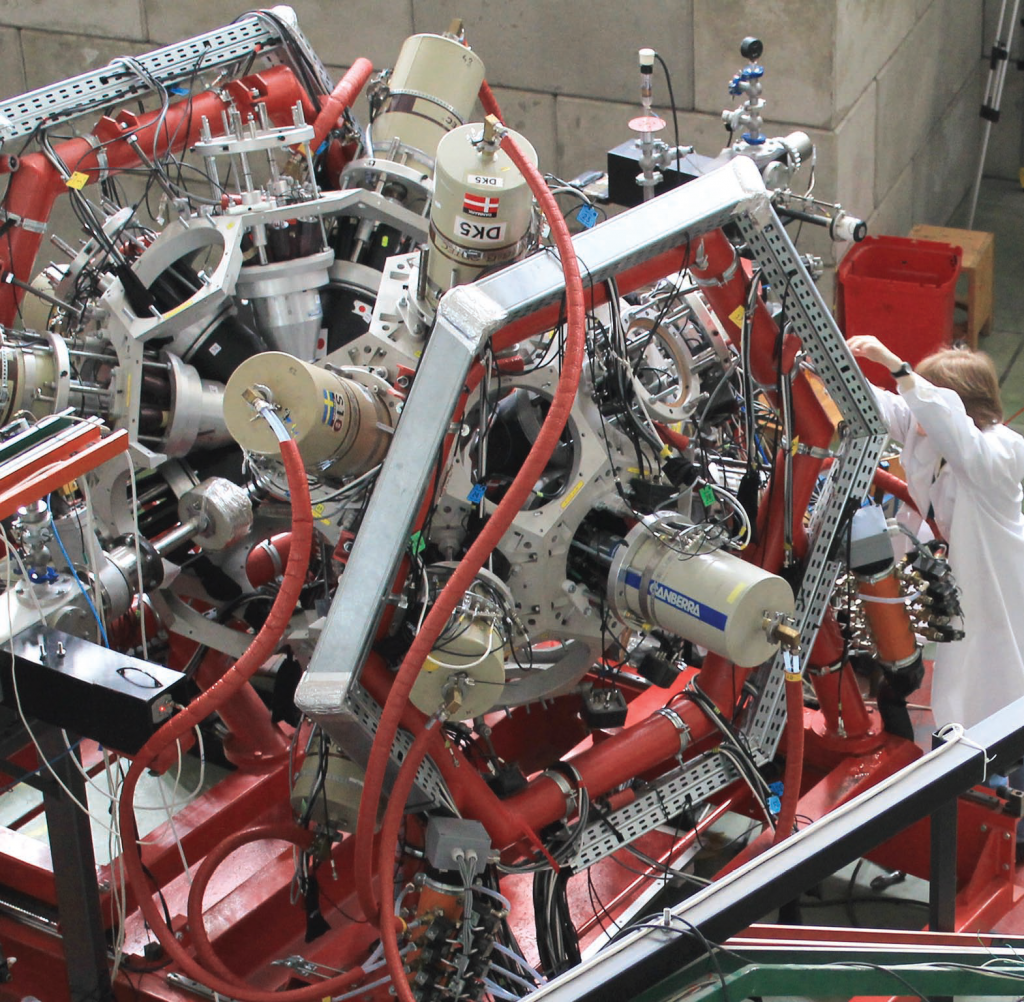
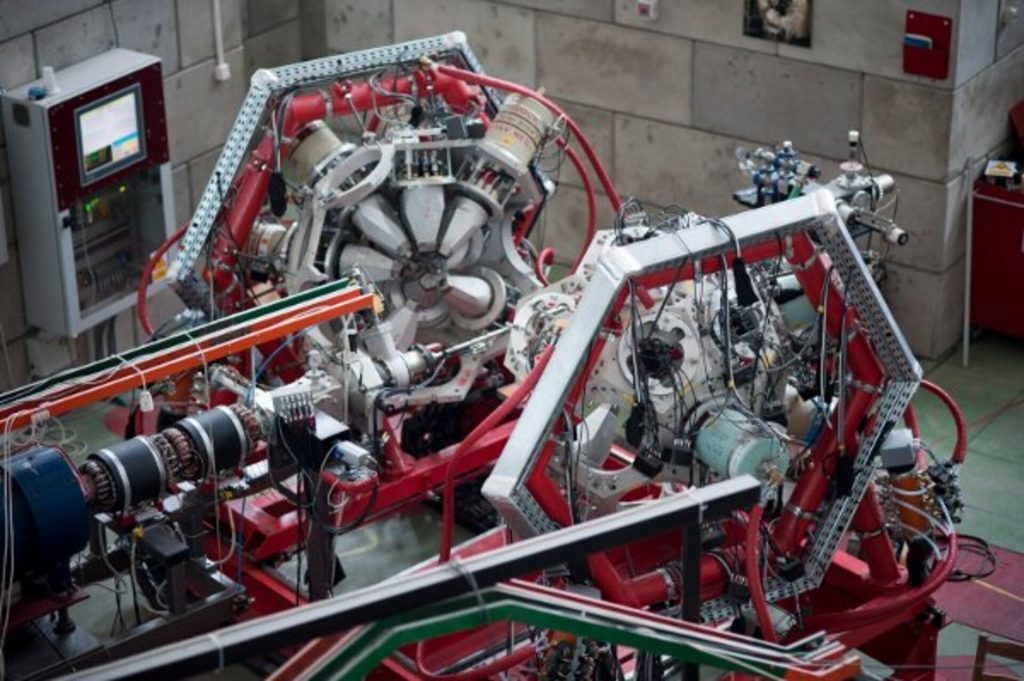
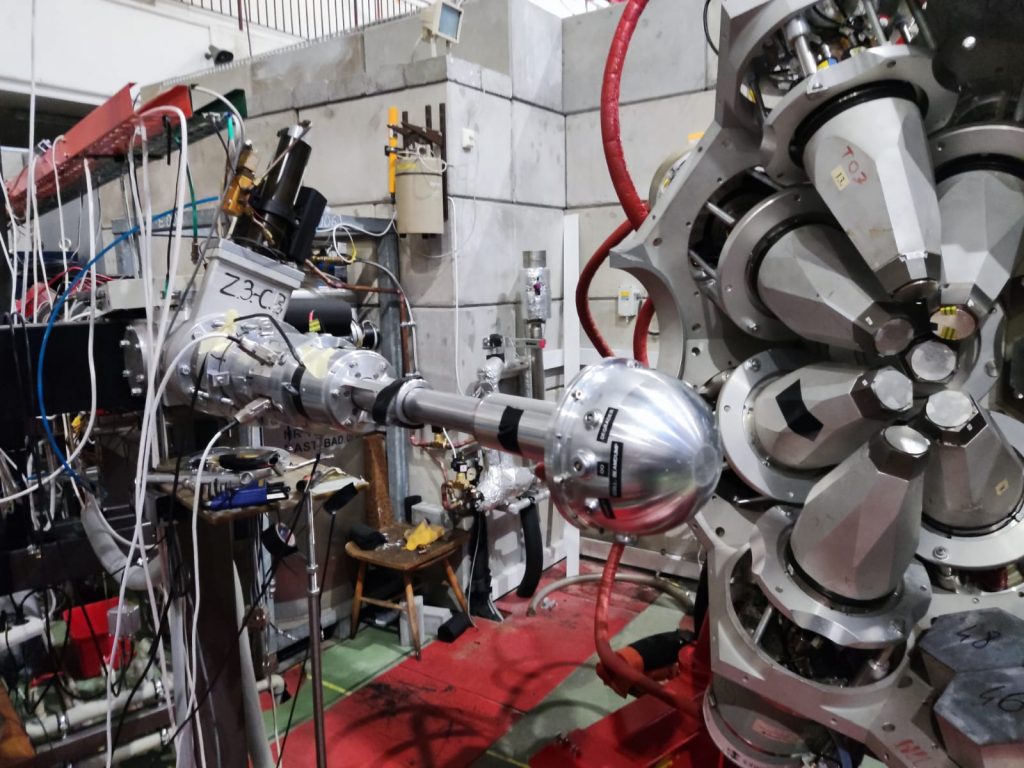
The results described form part of a broad international research programme aimed at determining the shapes of low-energy 0+ states in even-even Cd nuclei, starting with 110Cd. This programme is being carried out using complementary research techniques and the most advanced detection systems. As part of this programme, Iwona Piętka is preparing her doctoral thesis based on experimental data collected using the AGATA system – a latest-generation gamma spectrometer. This work is being carried out as part of the Doctoral School of Exact and Natural Sciences at the UW in the Heavy Ion Laboratory under the supervision of Dr Katarzyna Wrzosek-Lipska and Dr Leszek Próchniak.