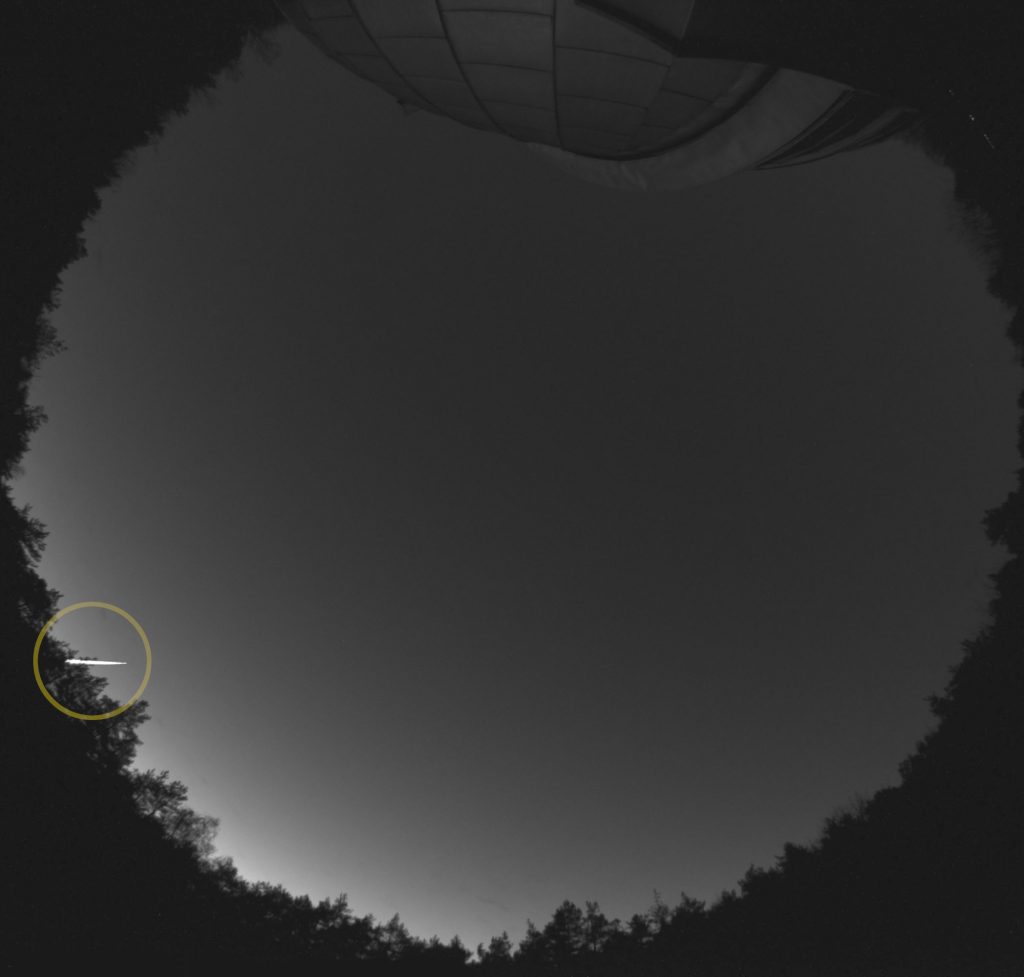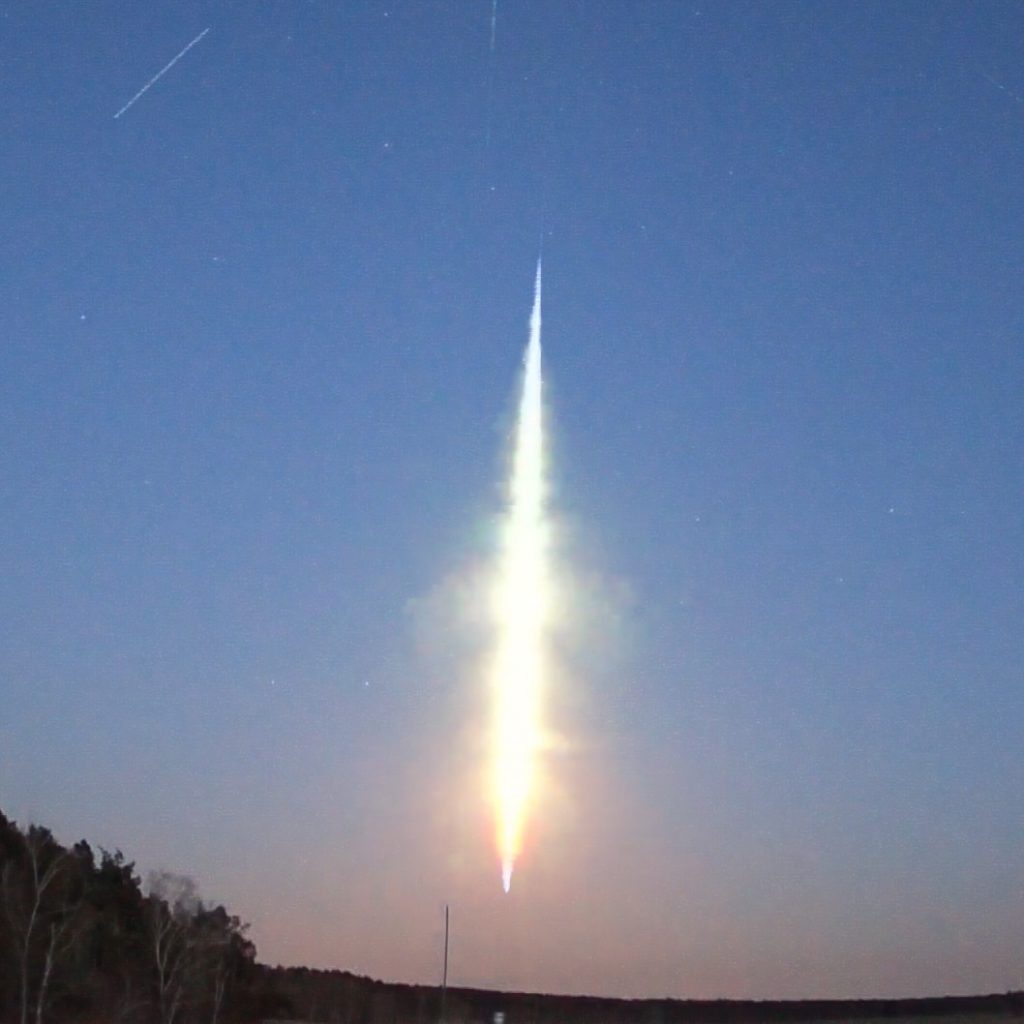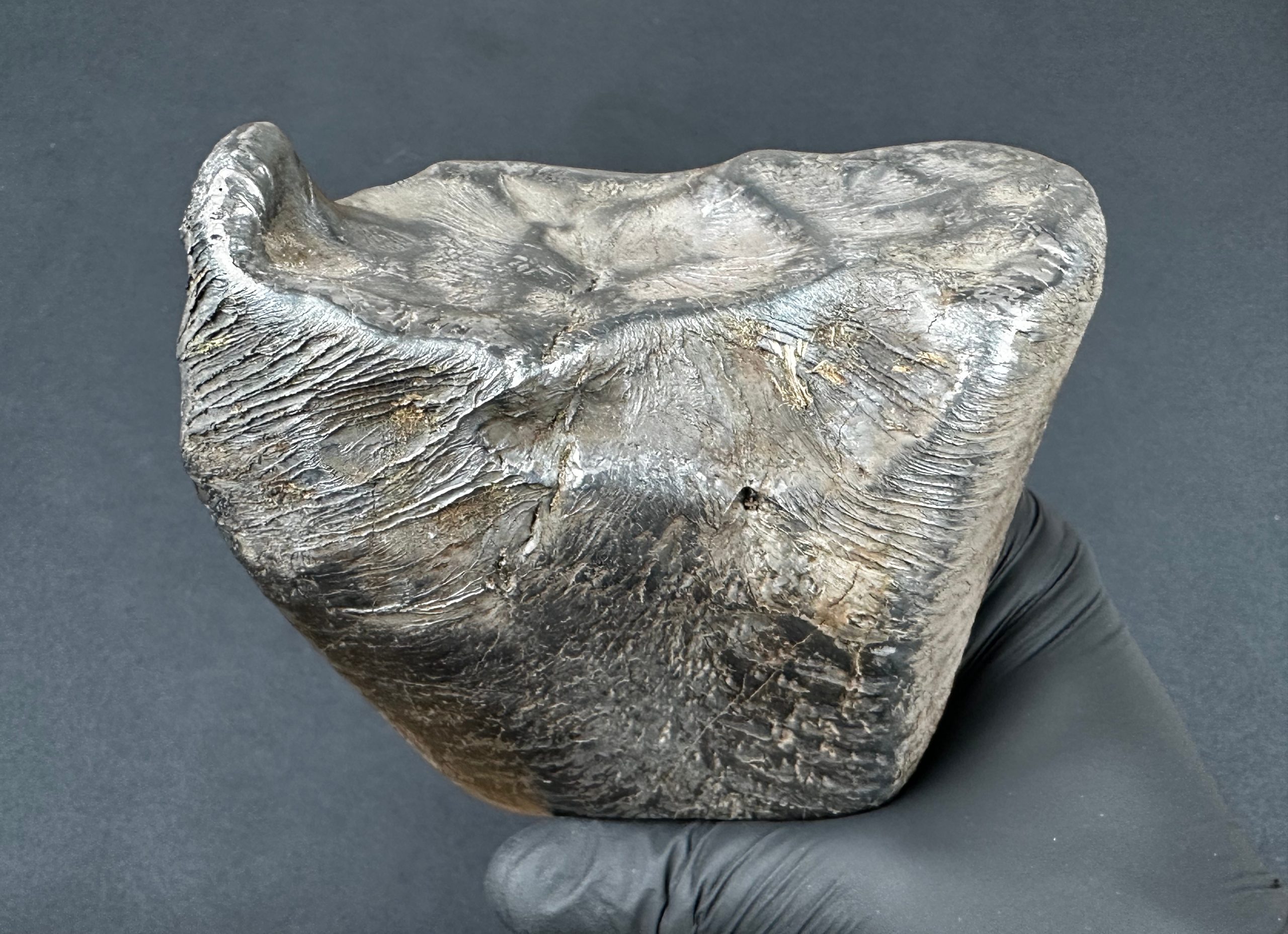


On 17th April, a very bright object flew over the Greater Poland and Łódź provinces and was recorded by cameras belonging to the nationwide Skytinel fireball network. Data from 11 cameras and two spectrographs indicated that an iron meteorite weighing several kilograms had fallen in the municipality of Zadzim, near Łódź. The meteorite was found five days after the fall, and Prof. Szymon Kozłowski from the Astronomical Observatory UW took part in the observations, search operations, and initial verification of the find.
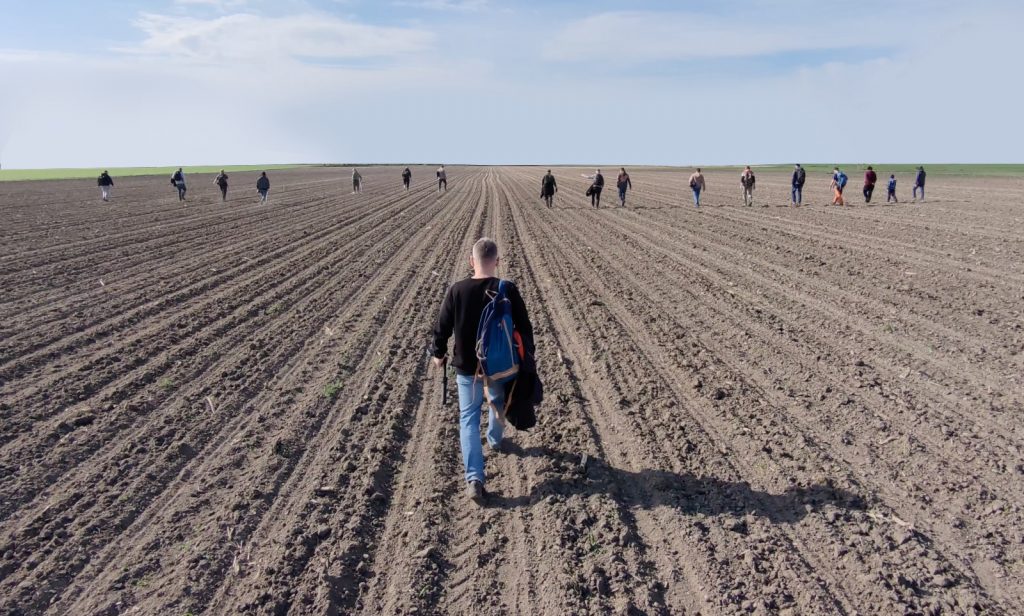
The first searchers – members of the Skytinel fireball network – arrived in the designated area on 18th April. They carried out a reconnaissance, which indicated that the terrain was suitable for a search; some of the fields had not yet been sown, and the farmers had given their consent for the team to cross their land. On 19th April, 26 people associated with the Skytintel network travelled to the site and visually searched a significant portion of the designated area for a crater left by the meteorite. Drones and metal detectors were also used during the search. However, no trace of the meteorite was found that day.
Mateusz Żmija, Skytinel network coordinator, consulted with a team of scientists from the Institute of Astronomy of the Czech Academy of Sciences, who helped narrow down the search area and reported that the only fragment from this fall should weigh 2.7 kg. This value was obtained based on dynamic data, as well as records from specialised radiometers used by Czech researchers, which record the fireball’s brightness curve at a frequency of 5,000 Hz. After obtaining this information, a new simulation of a meteorite fall with a mass of 2.5–3 kg was conducted, resulting in a significantly narrowed search area measuring 300 x 200 m.
The triangular disc
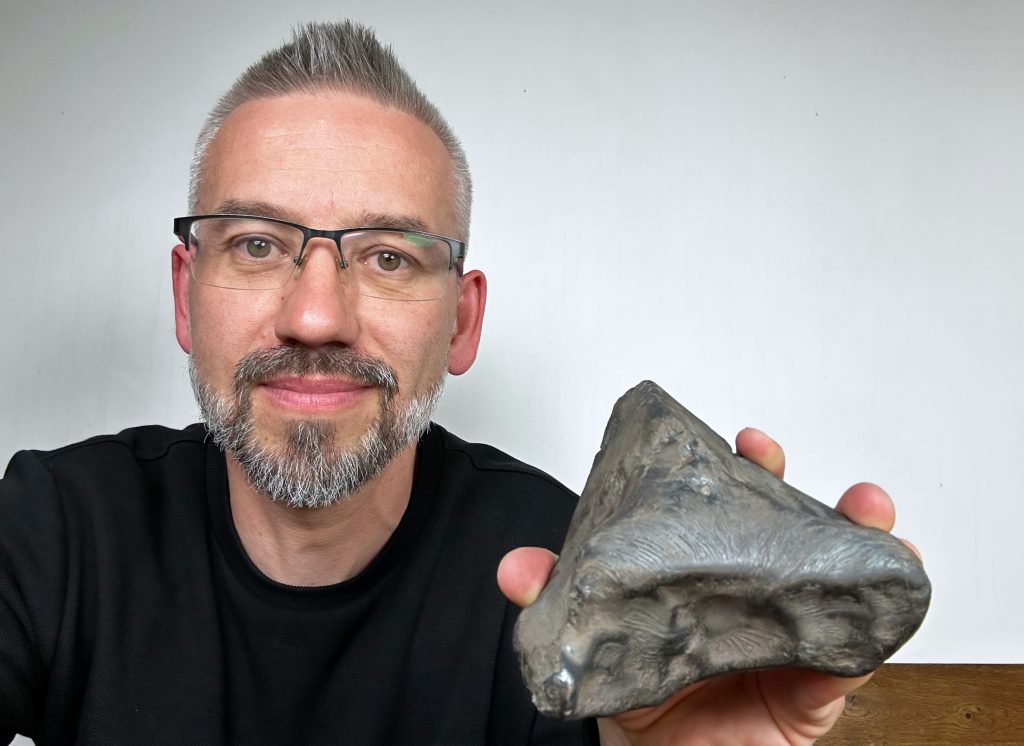
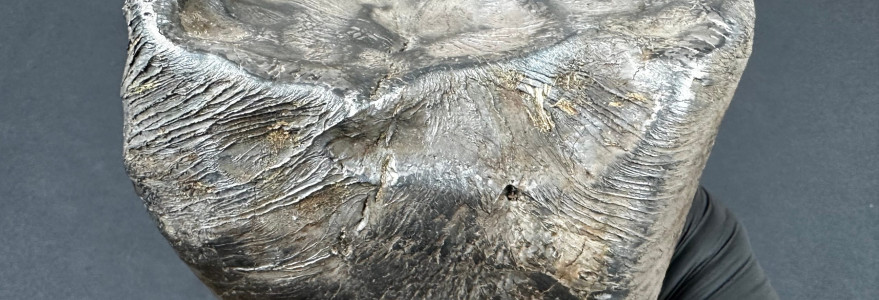
On 22nd April, several members of the Skytintel meteorite network once again made their way to the expected impact site. One of the search teams consisted of Anna Walczak and Paweł Walczak. It was they who spotted a hole in the ground about 40 cm deep, from which they recovered a 2.9 kg iron meteorite specimen. Simulations confirmed the location of the find, as the specimen was situated within both the original and the narrowed-down impact area. As the meteorite stabilised its position whilst passing through the atmosphere, its shape resembles a triangular disc measuring approximately 14.5 x 11.5 x 6.5 cm. It is covered with a fusion crust and numerous lines of solidified material.
The finders meticulously documented the impact site and secured and cleaned the specimen. An initial visual verification of the find was carried out by Prof. Szymon Kozłowski from the Astronomical Observatory of the University of Warsaw, who confirmed that we are dealing with an iron meteorite, most likely an octahedrite.
“Upon receiving news that a meteorite had been found, I immediately went to visit the finders, where I had the opportunity and pleasure of examining the specimen they had spotted a few hours earlier. I had no doubt whatsoever that I was holding an iron meteorite in my hands. As it passed through the Earth’s atmosphere, the surface of this cosmic body melted, and the hot material flowed down it in the form of metal rivulets. These solidified the moment the meteorite had slowed down sufficiently in the atmosphere. The specimen is covered in such solidified rivulets in many places. In some places on its surface, we can see characteristic pits, known as regmaglypts, which are one of the well-known features of meteorite surfaces. In two places, I noticed narrow parallel or intersecting bands of metal, likely crystals of an iron-nickel alloy – kamacite. In my opinion, we are therefore dealing with an iron meteorite, specifically an octahedrite. Such metal bands unequivocally indicate the specimen’s extraterrestrial origin, as these crystals form over millions of years only within asteroids. Of course, the meteorite must be examined to determine its exact type and origin,” said Prof. Szymon Kozłowski, a meteorite specialist.
An interesting coincidence
The Skytinel fireball network has begun consulting with partner research institutions regarding the analysis of a meteorite that has been found. In the case of meteorites found shortly after impact, the measurement of short-lived radioactive isotopes is crucial. These measurements are scheduled to begin on 25th April. Once they are completed, which will take place in a few weeks’ time, the process of analysing the meteorite’s composition and its official classification will commence.
The meteorite found is primarily of scientific value, a fact of which its finders are well aware. They have agreed to provide the required sample for classification, as well as to display the meteorite in museum exhibitions, thereby not only contributing to the development of Polish science but also serving an educational purpose. These are also the main objectives of the Skytinel network – supporting research into fireballs and the professional location and documentation of meteorite falls, to maximise their scientific value and contribute to the popularisation of knowledge about space matter.
It is an extremely interesting coincidence that this meteorite fell during the 14th Meteorite Conference in Koluszki (17th–18th April), organised by the Polish Meteorite Society in collaboration with Paweł Walczak – one of the finders of the specimen. Furthermore, the fall was recorded by the SN12 – Koluszki station, which is supervised by Paweł Walczak and the Koluszki Space Station.