
Researchers from the University of Warsaw have launched a new interdisciplinary research project devoted to one of the most important sites in the early history of Islam in Ethiopia. The initiative combines ethnographic and archaeological research, aiming to provide a comprehensive perspective on the material heritage and local narratives associated with the First Hijra and its significance for the identity of the community of Negash.
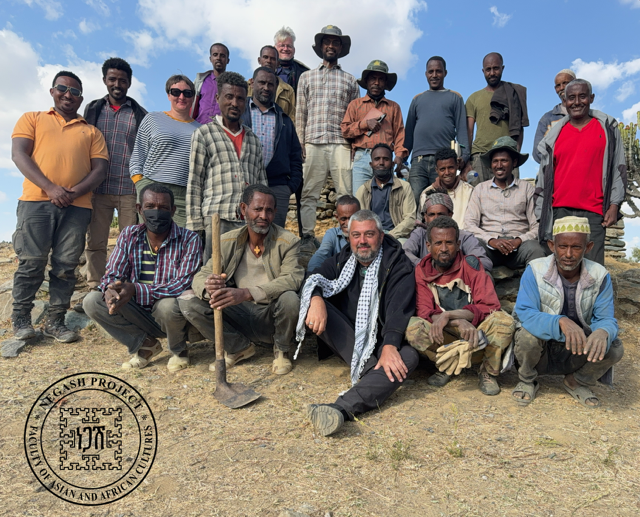
In December, a research team from the Faculty of Asian and African Studies at the University of Warsaw carried out in the town of Negash (Tigray, Ethiopia) the faculty’s first project to integrate ethnographic and archaeological research. This marks the beginning of a long-term research programme, the subsequent stages of which are intended to deepen knowledge of early Islam and the heritage of Tigray.
The project, entitled NeGaSh – Narratives, Guardianship, Sacredness, is led by Dr Zuzanna Augustyniak from the Chair of African Languages and Cultures and Prof. Kamil Kuraszkiewicz from the Department of Egyptology, in cooperation with Mekelle University, the Tigray Culture and Tourism Bureau, and the Ethiopian Heritage Authority.
In African Negash
“Negash occupies a unique place in the history of the region and of early Islam. According to local tradition, it was here in 615 that a group of companions of the Prophet Muhammad found refuge during the so-called First Hijra. The refugees were received by the ruler of Aksum, al-Najāshī, who is remembered to this day as a symbol of tolerance and openness,” explains Professor Kamil Kuraszkiewicz.
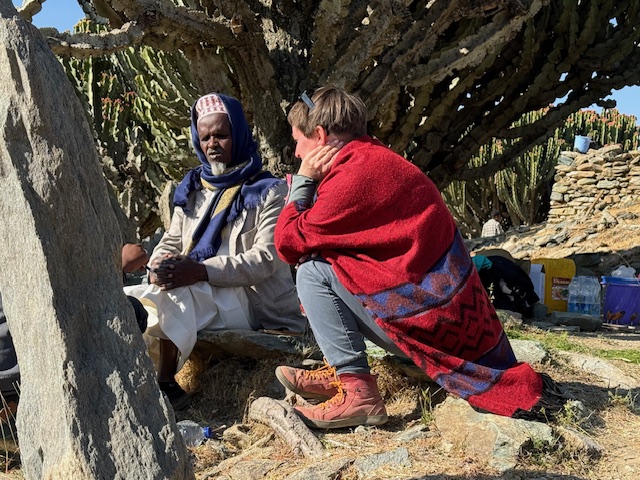
Researchers from the University of Warsaw are documenting local accounts of these events, particularly those passed down by the oldest and most respected members of the community, such as the imam of the contemporary mosque or representatives of one of the oldest families in Negash.
“Thanks to these accounts, it becomes possible to interpret and theoretically reconstruct the first mosque – now in ruins but still surrounded by deep respect among local residents – as well as to recreate the appearance of the former settlement and the lives of its inhabitants,” says Dr Zuzanna Augustyniak.
At the same time, archaeological research is being conducted, focusing on the site of the first mosque and its immediate surroundings. The combination of ethnographic and archaeological data makes it possible to view the history of Negash in a holistic way and to better understand how the memory of the First Hijra shapes local identity.
The field season constitutes the first stage of a long-term project, whose future phases are intended to further deepen knowledge of one of the most significant sites in the early history of Islam and the heritage of Tigray.