Representatives of the University of Warsaw, led by the Vice-Rector for Development, Prof. Ewa Krogulec, undertook an official visit to Mongolia. The programme included meetings and discussions on developing cooperation between the UW and the Mongolian State University, as well as other institutions in Ulaanbaatar, and the signing of a student exchange agreement.
From 9th to 16th August, the UW Vice-Rector for Development, Prof. Ewa Krogulec, was on an official visit to Mongolia. The itinerary consisted of:
- visits, meetings and discussions on the development of cooperation between the University of Warsaw and the Mongolian State University (MSU) as well as other institutions in Ulaanbaatar;
- the signing of a student exchange agreement;
- discussions on the establishment of a research station and the implementation of joint projects in the fields of geology, Mongolian studies, archaeology and the natural sciences.
The delegation also included: Prof. Agata Bareja-Starzyńska, Dean of the Faculty of Asian and African Cultures; Prof. Ewa Falkowska, Dean of the Faculty of Geology; Dr Konrad Zawadzki, Deputy Director of the Centre for Biological and Chemical Sciences; Dr Jan Rogala, Head of the Department of Turkology, Mongolian Studies and Tibetan Studies at the Faculty of Asian and African Cultures, Dr (with habilitation) Mariusz Gwiazda, Deputy Director of the Polish Centre for Mediterranean Archaeology (PCMA), and Prof. Radosław Karasiewicz-Szczypiorski from the PCMA, UW.
International Congress of Mongolian Studies
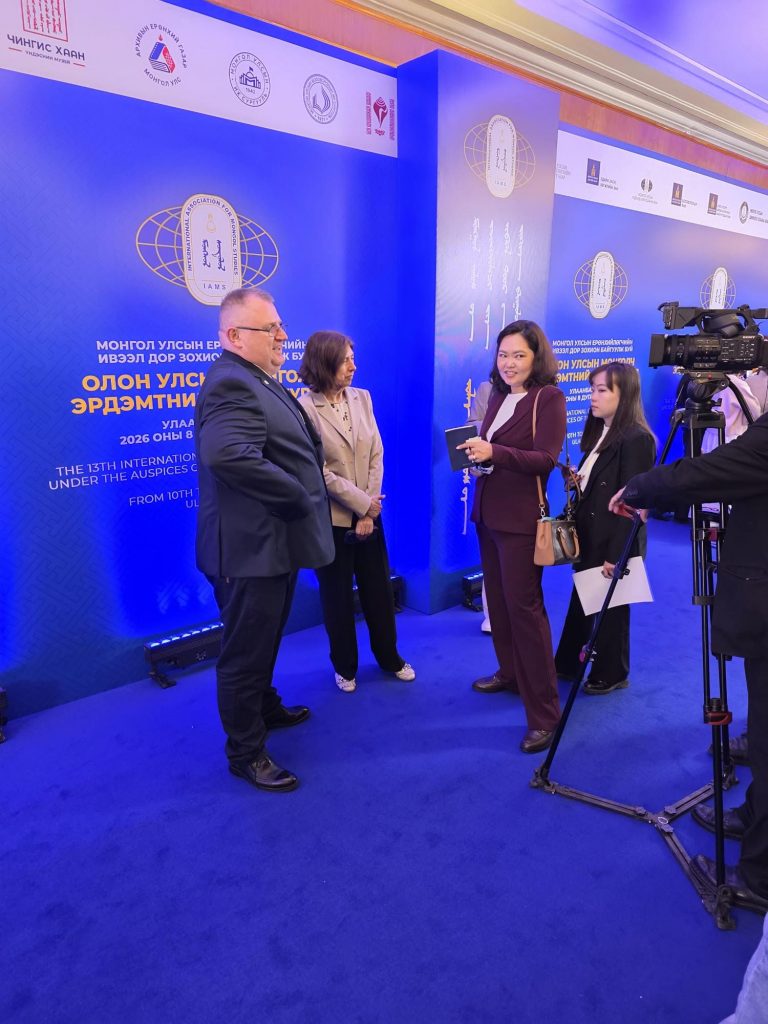
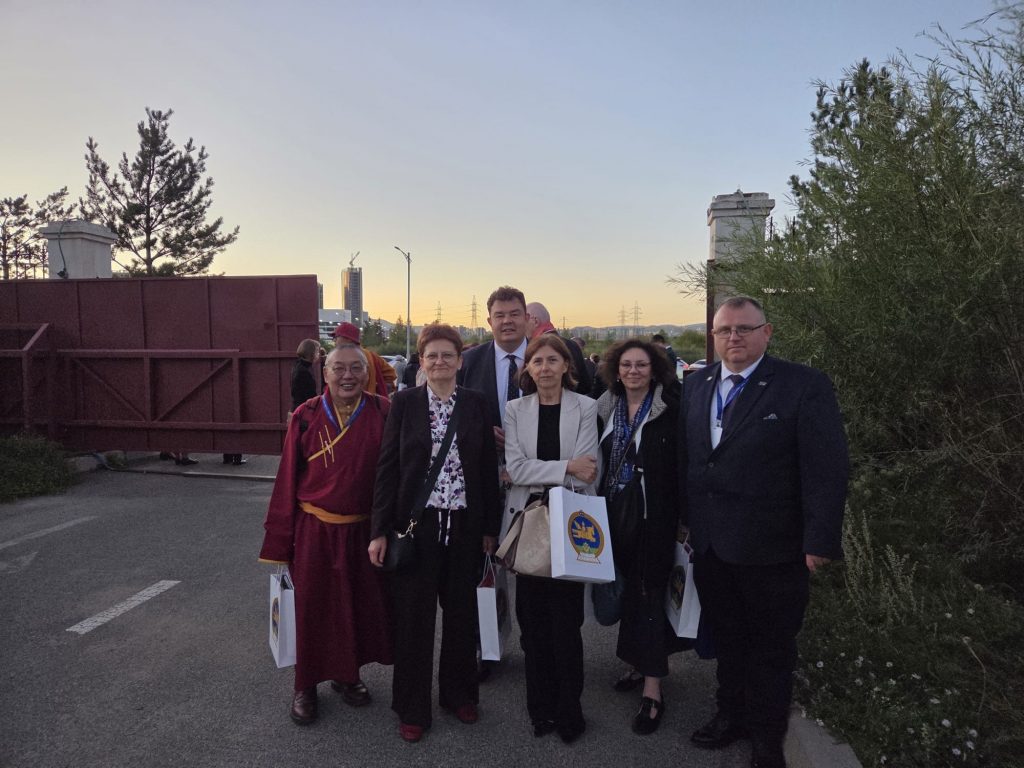
On 10th August, Prof. Ewa Krogulec took part in the opening of the 13th International Congress of Mongolian Studies, at which four representatives from the UW’s Department of Turkology, Mongolian Studies and Tibetology gave presentations. The event provided an opportunity to exchange experiences with numerous scholars engaged in a wide range of interdisciplinary studies on Mongolia, as well as to discuss future directions and the challenges facing Mongolists. On 10th August, the UW Vice-Rector, together with a university delegation and other Congress participants, attended a reception hosted by the President of Mongolia.
An agreement on the exchange
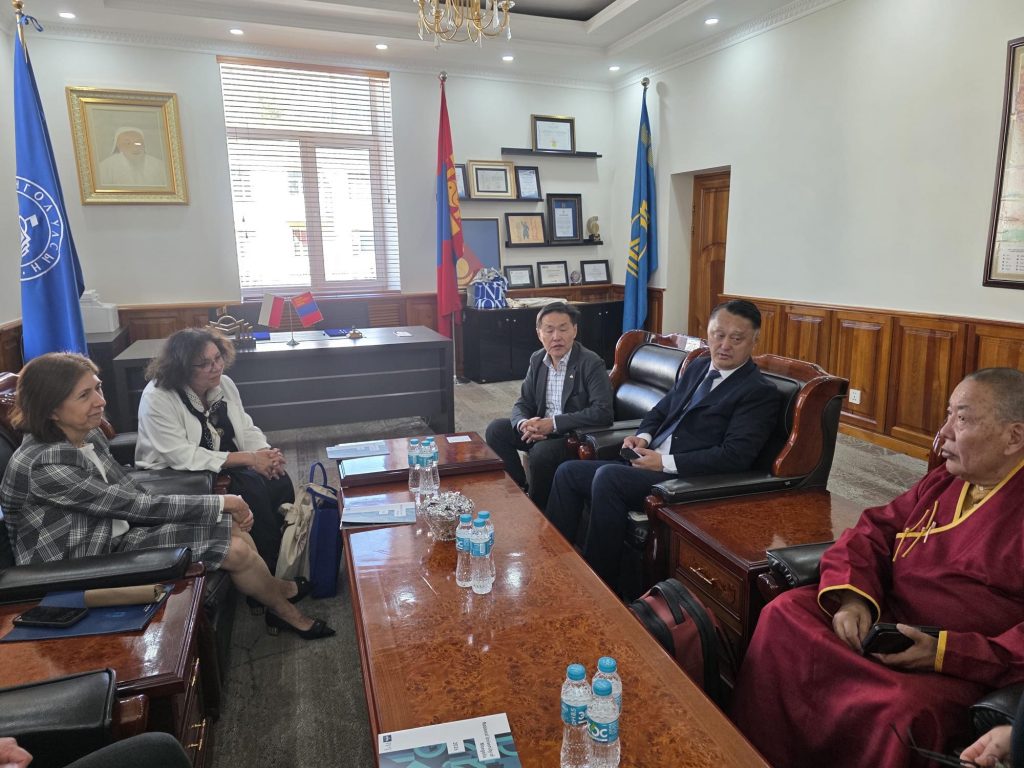
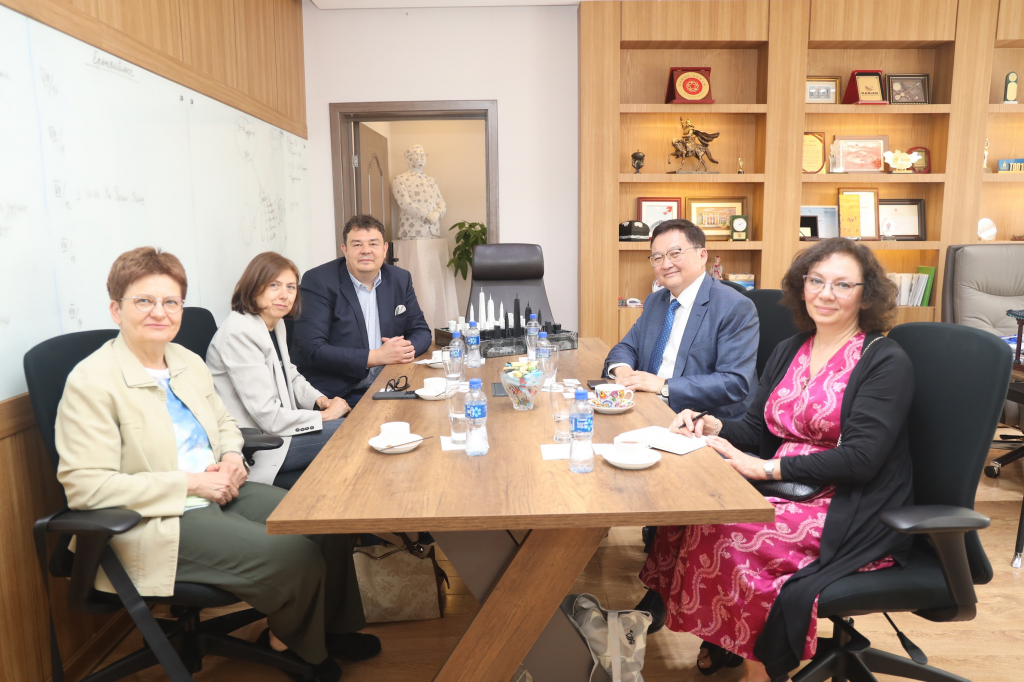
On the second day of the visit to Ulaanbaatar, the UW delegation, led by Vice-Rector, Prof. Ewa Krogulec, took part in a meeting with Prof. Bayanjargalyn Ochirkhuyag, Rector of the Mongolian State University, Prof. Gombosuren Munkhbayar, Dean of the Faculty of Natural Sciences at the Mongolian State University, and Prof. Erdene-Ochir, Head of the Institute of Mongolian Studies at the State University of Mongolia. The discussions focused on developing and expanding cooperation under the existing agreement, not only in the field of Mongolian studies but also in other academic disciplines – such as archaeology, geology and natural sciences. Considerable attention was paid to the exchange of experiences and cooperation between academic employees and students, as well as to the implementation of joint research projects and collaboration with Mongolian partners in applying certain research findings from the University of Warsaw in Mongolia. It was also recognised that the establishment of a joint University of Warsaw research station at the Mongolian State University would provide an important impetus for the development of multi-directional and interdisciplinary academic cooperation.
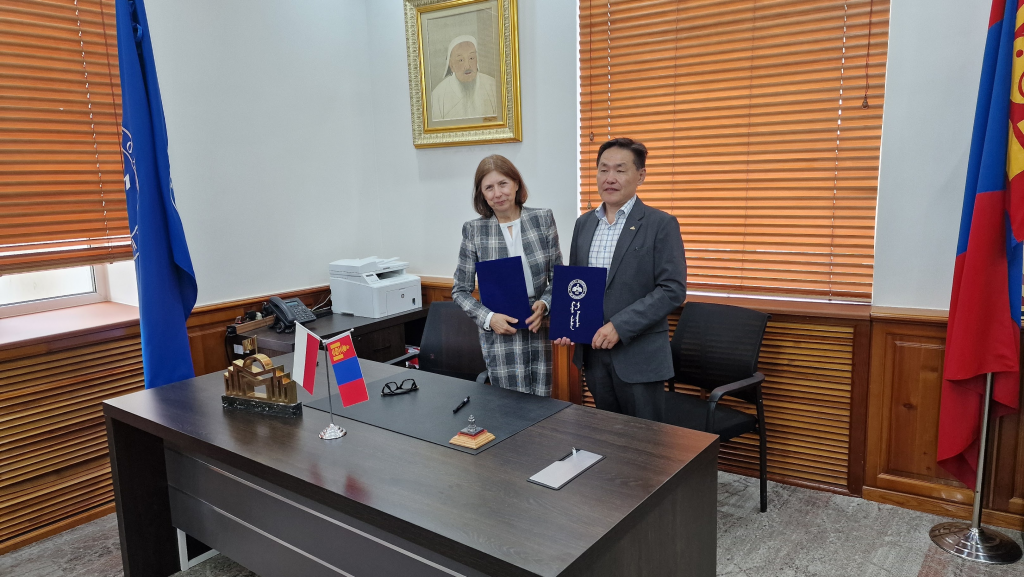
The Mongolian side emphasised its gratitude to the UW’s authorities for their support in developing Mongolian studies at the UW and also expressed its willingness to expand cooperation into new areas and joint projects. Rector Ochirkhuyag highlighted the exchange of academic employees and students as a key element in making this a reality. In order to provide a legal framework and practical opportunities for this cooperation, an agreement on the exchange of students and academic employees was signed between the University of Warsaw and SMU. On behalf of the UW, the agreement was signed by Prof. Ewa Krogulec, Vice-Rector for Development.
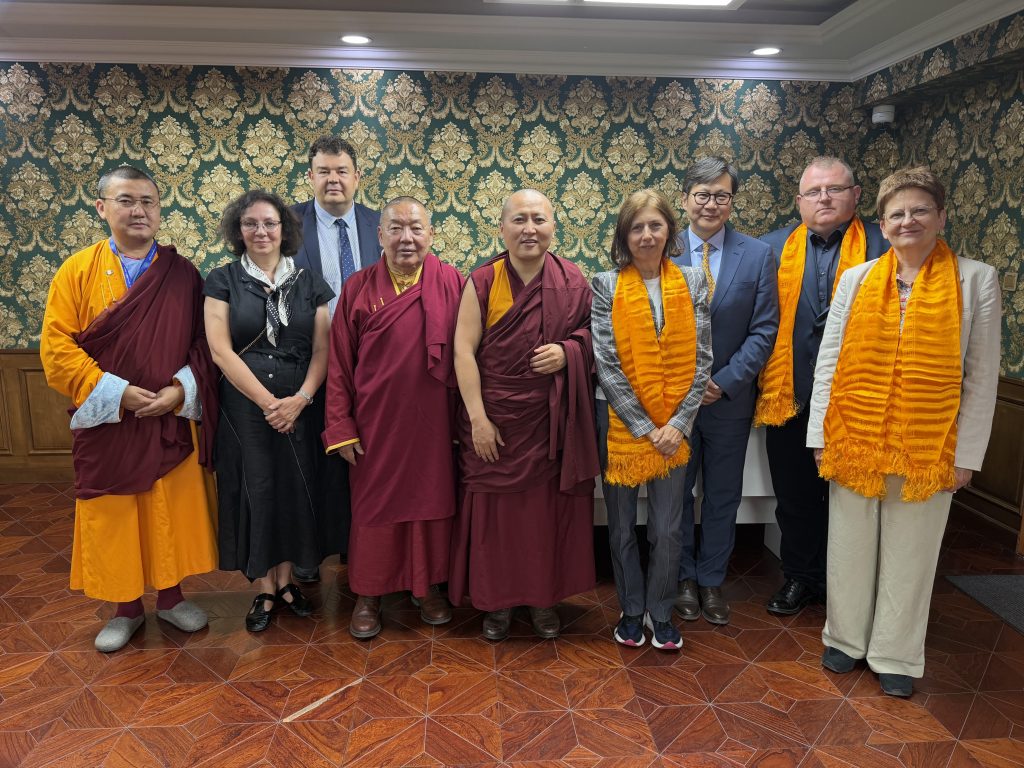
On 11th August, the UW delegation visited the Gandan Buddhist Monastery, where they were received in audience by its prior and the highest-ranking Tibetan Buddhist cleric in Mongolia, Khamba Lama Javzandorj, and by Dr Lkhagvademchig Jadamba, Rector of the Öndör Gegeen Dzanabadzar Mongolian Buddhist University. Discussions centred on the possibilities for implementing the provisions of the agreement concluded between the universities in the first half of 2025.
Business and diplomacy
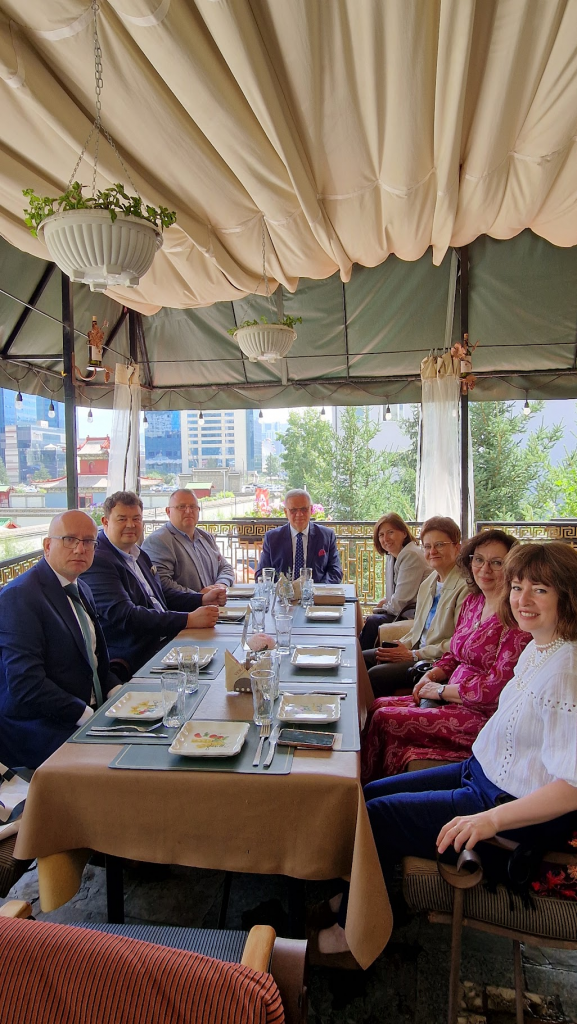
The next day of the visit was marked by meetings and discussions with representatives from the worlds of academia, business and Polish diplomacy. A meeting was held with Baatarjav Lkhagvajav, President of the Mongolian Chamber of Commerce and Industry. During the discussion, a number of issues relating to cooperation between the academic and business sectors were raised. Particular attention was paid to the potential for transferring technologies developed at universities to the economy, and to the role of cooperation between the academic and business communities in addressing specific development challenges.
Discussions centred on the areas and disciplines in which cooperation between Polish and Mongolian universities could support sustainable development, whilst also helping to strengthen mutual economic relations.
Representatives from various departments of the University of Warsaw presented several proposals for collaboration in the fields of applied biological and chemical sciences, mineral deposit geology, hydrogeology, land reclamation and environmental protection in the broadest sense.
On the same day, Prof. Ewa Krogulec and her delegation were invited to a meeting with Chargé d’affaires a.i. Krzysztof Świderk, Poland’s highest-ranking diplomatic representative in Mongolia. The discussions centred on plans to develop cooperation between the University of Warsaw and its Mongolian partners, opportunities to support the work of Polish researchers conducting research in Mongolia, and cooperation between the Polish Embassy and the University of Warsaw aimed at building the recognition and positive reputation of Polish science in Mongolia.
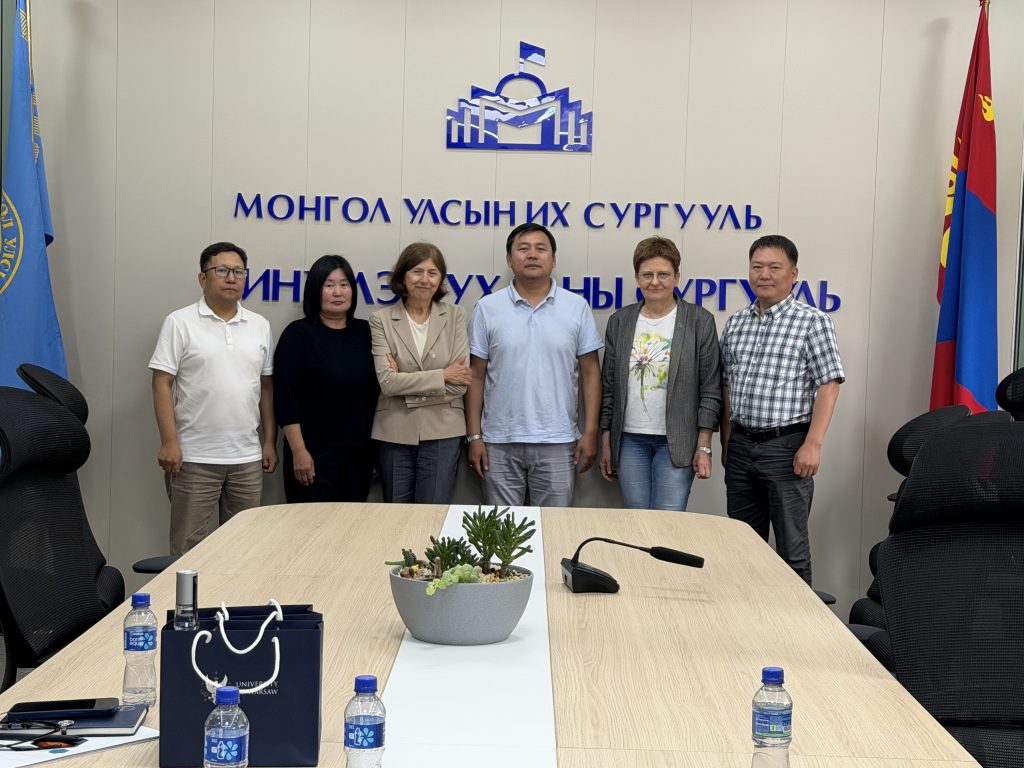
In the afternoon, a delegation comprising Prof. Ewa Krogulec, Prof. Ewa Falkowska, Dr Konrad Zawadzki and Dr Jan Rogala took part in a meeting with representatives of the Mongolian State University, including the Director of the Science and Technology Park, a representative of the Faculty of Natural Sciences and the Dean of the Faculty of Chemistry. The University of Warsaw representatives outlined the university’s research potential and proposed projects around which cooperation with Mongolian partners could be developed. A joint plan for further action was agreed, with implementation due to begin in autumn 2026.
Archaeology and geology
During the visit, an archaeological reconnaissance mission was also carried out in central Mongolia, in which Prof. Radosław Karasiewicz-Szczypiorski and Dr Mariusz Gwiazda took part. More than 20 archaeological sites were visited, and their research potential and the possible scope of future work were assessed. The information gathered forms the basis for further discussions regarding the launch of joint Polish-Mongolian archaeological research. Both sides expressed an interest in preparing projects involving work at selected sites.
Another key element of the programme was a meeting between representatives of the University of Warsaw’s Department of Geology – Vice-Rector Prof. Ewa Krogulec and Dean of the Faculty of Geology Prof. Ewa Falkowska – at the Research Centre of Geology and Mineral Resources of the Mongolian State University. The meeting focused on opportunities for developing scientific cooperation between the University of Warsaw and the Mongolian State University, with particular emphasis on geological research conducted in conjunction with other scientific disciplines. Potential areas for joint research include, amongst others, mineral resources, hydrogeology, geophysics, petrology, tectonics, environmental protection, as well as the use of modern methods of modelling and spatial analysis.
It was emphasised, amongst other things, that Mongolia is a unique area for conducting geological research, offering very extensive – and in many cases still insufficiently explored – opportunities for fieldwork. The country’s diverse geological structure, the presence of mineral resources, the specific nature of the geological processes taking place, and the links between geological structure, water resources, the environment and climate change create particularly interesting conditions for conducting interdisciplinary research.
Student and early-career researcher mobility was also a key element of the discussions. The organisation of student exchanges between the University of Warsaw and the Mongolian State University was discussed, as was the development of joint field-based training programmes. A particularly interesting possibility is the organisation of summer schools, workshops and field courses, which would enable students from both universities to work together in geologically unique areas of Mongolia.
In this context, discussions also focused on the possibility of utilising the potential of European geological research centres and facilities, as well as the scientific infrastructure available at the University of Warsaw, to organise workshops, summer schools and other initiatives designed to foster cooperation between Mongolian and European teams.
Archaeologists from the UW Polish Centre for Mediterranean Archaeology also held separate meetings regarding future cooperation. Discussions centred on opportunities for collaboration, the exchange of experiences, the organisation of workshops and expert visits, as well as potential topics for joint projects and research.
Prof. Agata Bareja-Starzyńska took part in a seminar held to mark the opening of the exhibition at the Bogdo-Chan Museum. Dr Jan Rogala, meanwhile, took part in workshops aimed at directors and representatives of centres around the world specialising in Mongolian studies. During his presentation, he outlined the history of Mongolian studies in Warsaw, its main areas of research and academic programmes, as well as proposals for new research projects and international cooperation initiatives.
Key findings and future directions for cooperation
The visit demonstrated that the University of Warsaw’s existing cooperation with its Mongolian partners could be significantly expanded – both in terms of the number of disciplines involved and the nature of the joint activities undertaken.
The key areas for further action include:
- the development of student, doctoral candidate and academic staff exchanges;
- the preparation of joint research projects in the fields of geology, hydrogeology, archaeology, Mongolian studies, biological and chemical sciences, and environmental protection;
- further work on the concept of a joint research station;
- the development of joint field research in Mongolia;
- the organisation of summer schools, workshops and field-based training programmes;
- the development of archaeological cooperation based on identified sites;
- the utilisation of the scientific infrastructure of the University of Warsaw and European centres cooperating with the University;
- developing cooperation between academia and the business community and exploring opportunities for the practical application of research findings;
- further strengthening the position of Mongolian studies in Warsaw and its international cooperation.