A stamped vice dating from the 2nd century BC, a fragment of a previously unknown stylobate, around 350 architectural decorative elements and other interesting finds are the result of work carried out by archaeologists from the University of Warsaw conducting excavations in Cyprus. The UW Polish Centre of Mediterranean Archaelogy has summarised the findings of a joint expedition by the University of Warsaw and the Jagiellonian University.
The expedition is directed by Prof. Ewdoksia Papuci-Władyka, head of the Research Centre in Cyprus of the Polish Centre of Mediterranean Archaeology, University of Warsaw (PCMA UW) based in Paphos. The project also involves researchers from the Warsaw University of Technology, the University of Hamburg, the Wrocław University of Science and Technology, and the National Museum in Kraków.
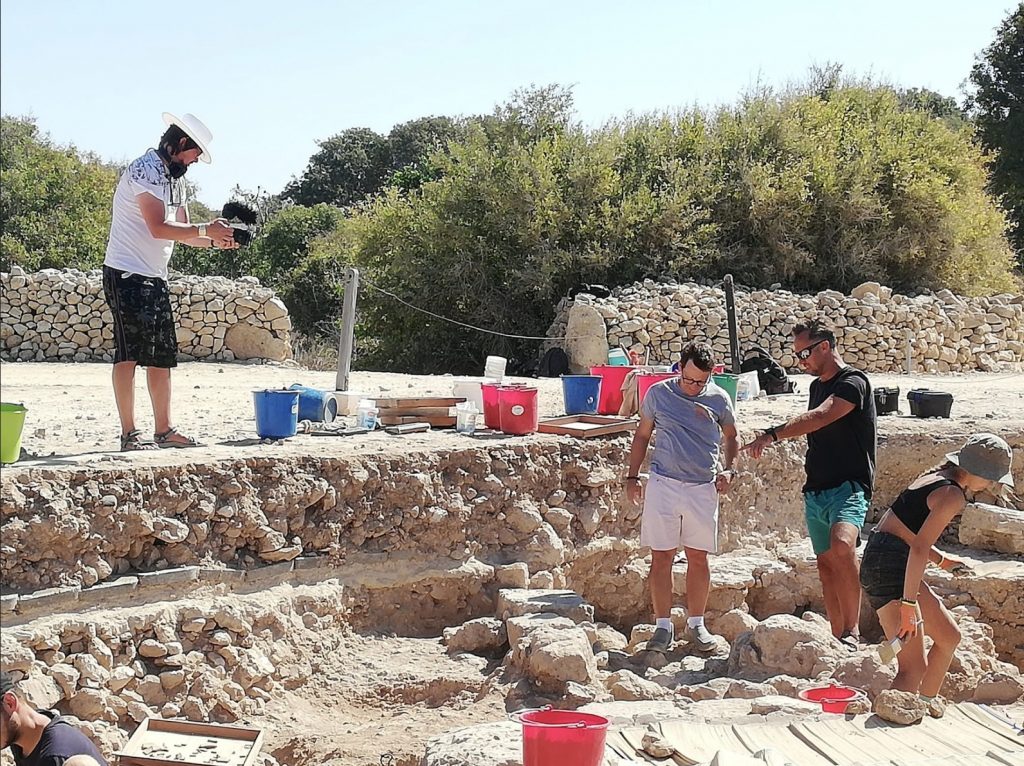
In 2025, both study and excavation campaigns were carried out. In spring (April–May), a small team of specialists worked on the study of material uncovered in previous years and prepared it for publication. The main excavation campaign took place in September, with the participation of researchers, students, and volunteers – around 30 people in total – who used the facilities of the PCMA UW Research Centre in Paphos. Excavations were conducted in two areas of the site: the Maloutena district and the Agora.The Maloutena district.
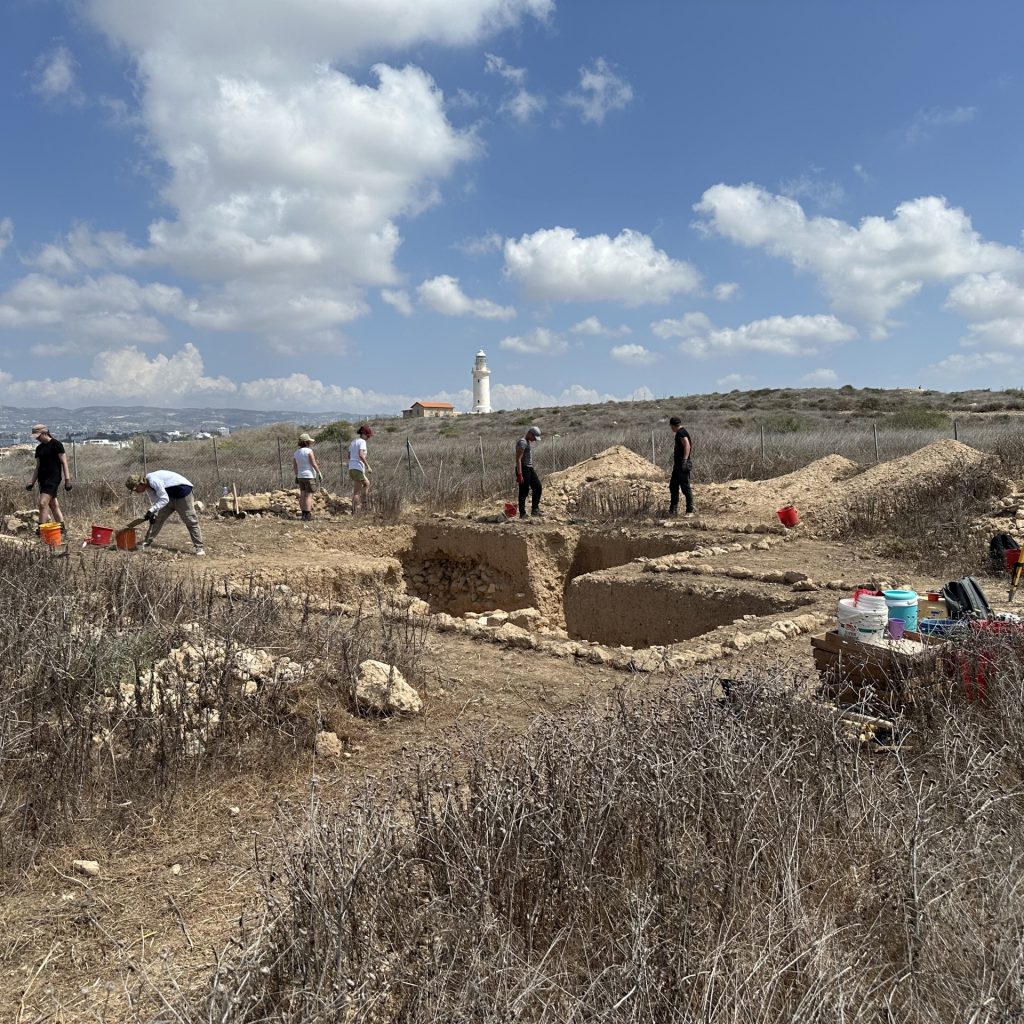
In Maloutena, work continued in the western part of the city, west of Fanari Hill, the highest point of ancient Paphos interpreted as the city’s acropolis. Research in this area began in 2022 and has produced promising results for the study of some of the earliest layers of the ancient city, dating to the late Hellenistic period. Across much of the site these layers are heavily disturbed by earthquakes and later Roman-period construction. In the area currently under investigation, however, they appear relatively well preserved and – importantly – are accessible less than a meter below the ground surface.
Excavation focused on three parts of the trench. In its northern extension, archaeologists reached the level of a stone-paved street and discovered numerous crucibles for melting metal made from the lower parts of amphorae, indicating the presence of a small production area. In Room 1, within the foundation trench of a wall, the team found, among other objects, a stamped Rhodian amphora handle bearing the name of the eponym Aristombrotidas, dated to around 117 BC. Owing to these finds, these architectural remains (most likely of a residential function), could be dated to the late Hellenistic period.
Work in this area is linked to the project Assessing the archaeological potential of the western part of ancient Nea Paphos – evaluation and research perspectives. led by Dr Paweł Lech of PCMA UW. The project is funded by the National Science Centre (NCN) under the MINIATURA 8 program and aims to assess the archaeological potential of the western part of the city and identify directions for future research.
Work on the Agora
The second area of research was the Agora, the main public square of the city, where excavations supervised by Dr Łukasz Miszk from the Jagiellonian University were conducted in the northern part of the East Portico, within trench T.II. In the south-eastern corner, archaeologists uncovered a shallow water basin functioning as a settling tank, connected with
well S.233, discovered in previous years and dated to the first half of the 2nd century BC. A ceramic pipe leading from the north was embedded in the basin.
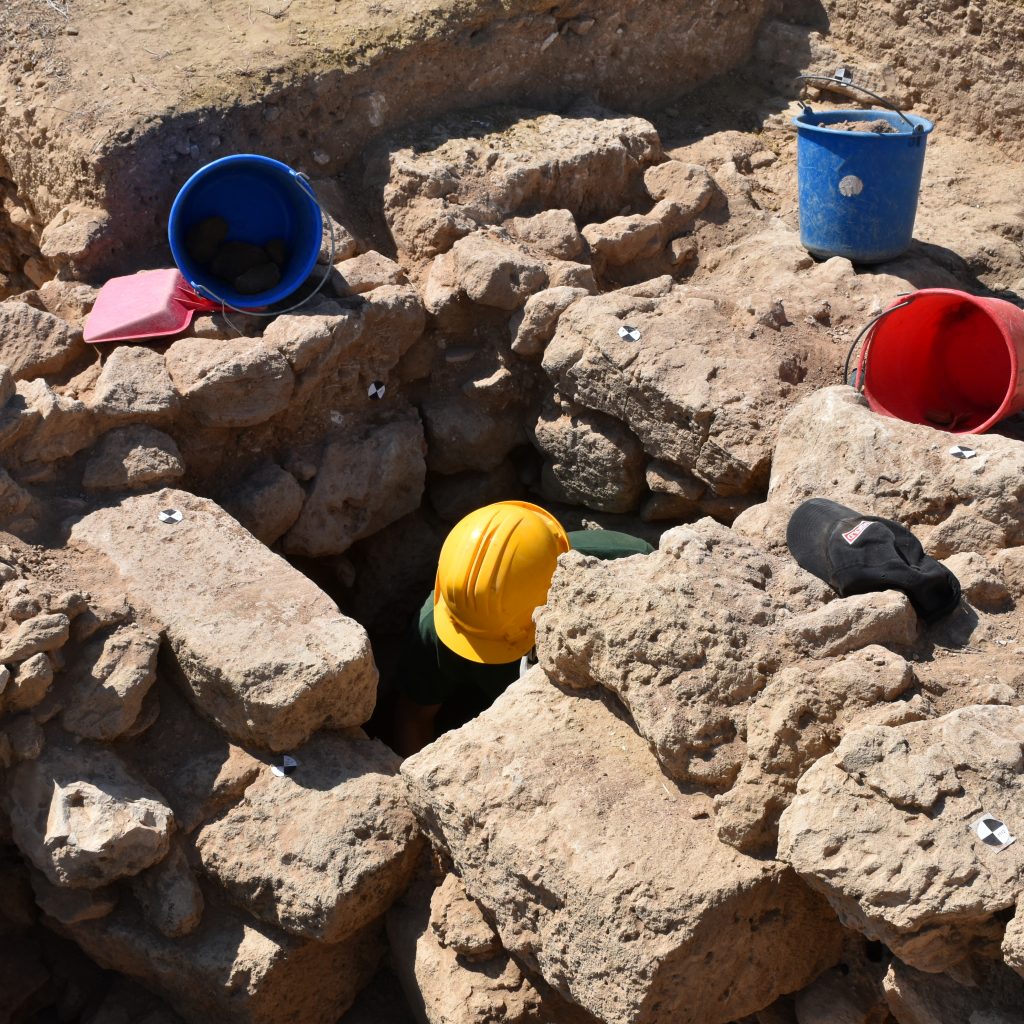
In the western part of the trench, researchers exposed a fragment of a previously unknown stylobate together with the lower sections of two fluted column drums. Nearby, traces of burning and a fragment of a terracotta pipeline were recorded. At the current stage of research, the precise chronology of these discoveries remains uncertain. The fragment of the colonnade likely belonged to an earlier phase of the portico preceding its final form, dated to the first half of the 2nd century CE. Further excavation seasons will help clarify the chronology and function of these structures.
Study of architectural elements
At the same time, study work on architectural decoration in Maloutena was carried out by Dr Aleksandra Brzozowska-Jawornicka from the Wrocław University of Science and Technology together with a student from the same institution. During field inspection, around 350 elements of architectural decoration were identified within buildings excavated by the expedition, including the Villa of Theseus, the so-called Hellenistic House, the Early Roman House, the House of Aion, and the North-Eastern House. All elements were inventoried, photographed, and described in a dedicated database.
Work on movable finds was also conducted at the Archaeological Museum in Paphos. The numismatic material was studied by Assoc. Prof. Jarosław Bodzek from the Institute of Archaeology of the Jagiellonian University, while Dr Barbara Zając from the National Museum in Kraków carried out conservation of metal artefacts. A total of 71 coins (mostly bronze, with one silver example) were conserved, along with a fragment of gold foil and the handle of a bronze situla.
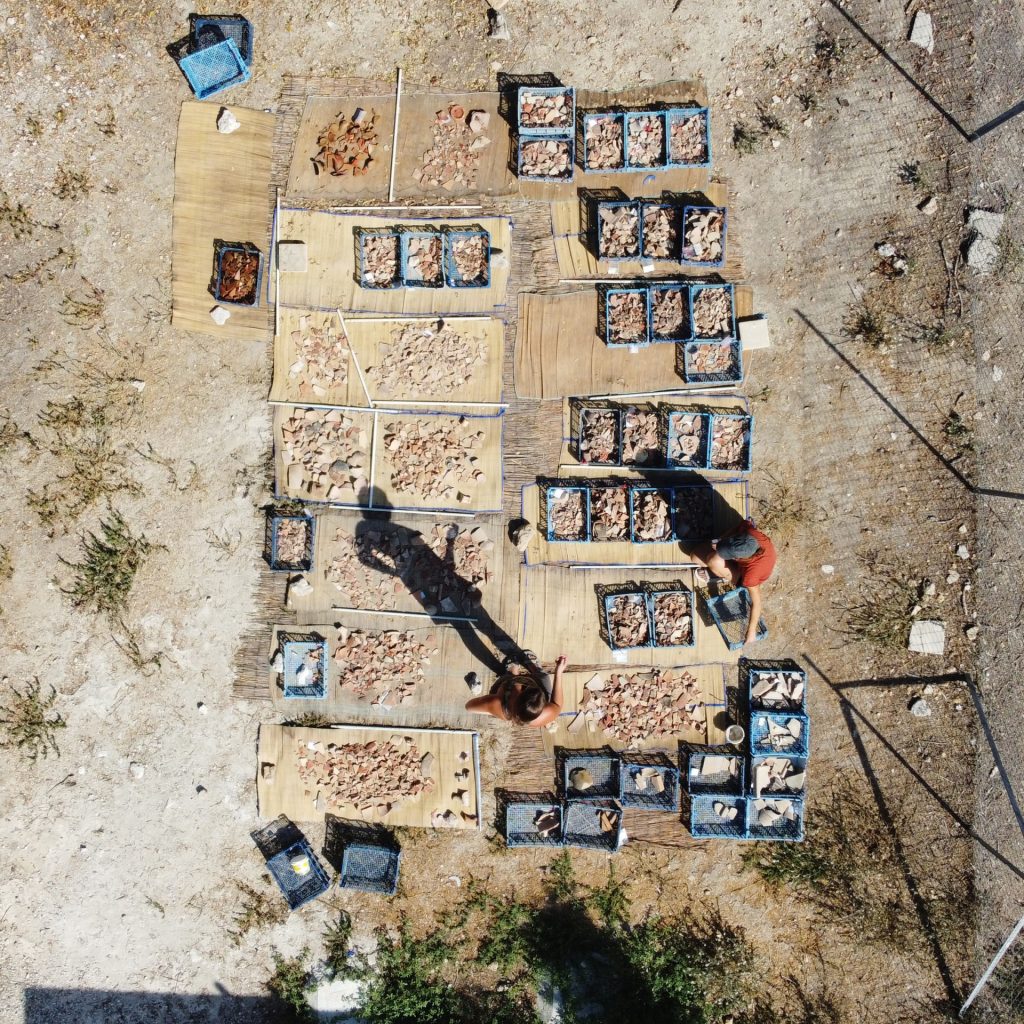
As in previous years, ceramic material from both the current and earlier excavation seasons was also documented. In this labour-intensive process, specialists are assisted by students and volunteers living in Cyprus. The work is supervised by Dr Małgorzata Kajzer from the Jagiellonian University.