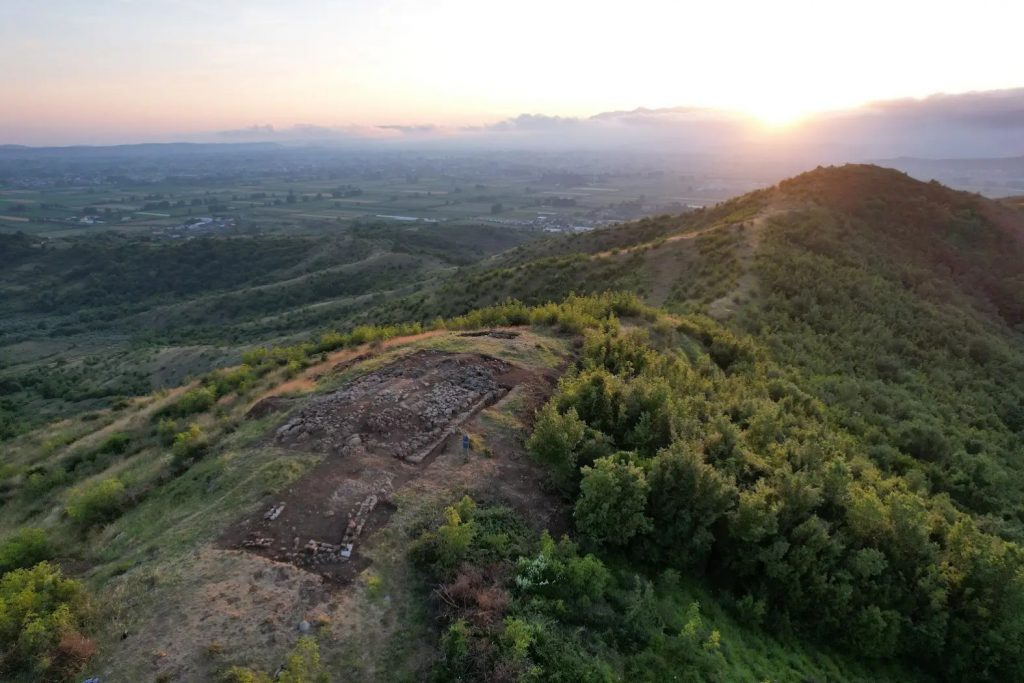
Researchers from the University of Warsaw and the University of Tirana have discovered the remains of a large Hellenistic temple within the site of an ancient city in northern Albania. This is the first Illyrian structure of its kind to be identified in this region and marks another breakthrough in research into the so-called “lost city”.
Modern-day Bushat – situated about 10 km south of Shkodër in northern Albania – harbours the remains of a vast Illyrian settlement. This site is one of the few examples in Europe of a “lost city” – a place that for centuries has been erased not only from maps but also from human memory.
The city was rediscovered in 2018 by archaeologists from the UW’s Antiquity of Southeastern Europe Research Centre and the University of Tirana. An analysis of the site’s topography and a comparison of the research findings with accounts from ancient sources suggest that this may be the ancient Bassania.
At the top of the hill
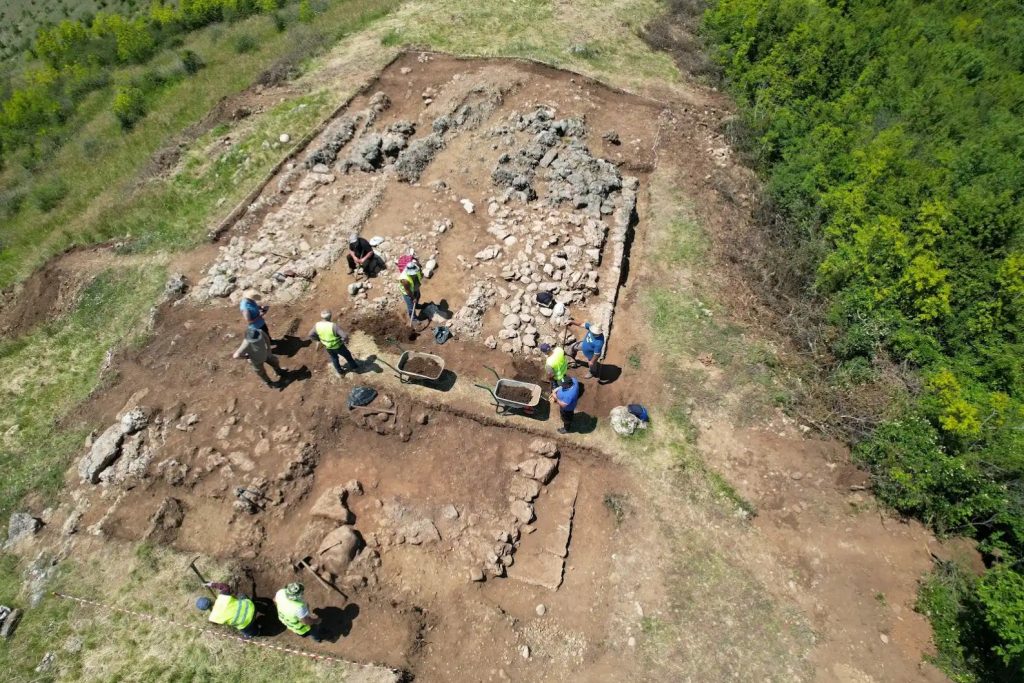
During the recently concluded research season, excavation work focused on the city’s acropolis, situated at the top of the hill overlooking the entire site. Archaeologists have uncovered the complete stone foundations of a large rectangular structure measuring 13.6 × 9.6 m. Its proportions correspond to those of classical Greek temples.
“Judging by the building’s location on the hilltop and its orientation in relation to the cardinal points, we can conclude that these are the remains of a temple which, from the 4th to the 2nd century BC, crowned the city’s acropolis,” emphasises Prof. Piotr Dyczek, director of the UW’s Antiquity of Southeastern Europe Research Centre, adding: “During the excavations, a defensive wall surrounding the hill was also partially uncovered, which served as the so-called temple temenos.”
The discovery is of particular significance for research into Illyrian culture. It is the first Illyrian temple to be discovered in northern Albania.
The city was abandoned as early as the Hellenistic period, but as early as the 3rd century CE, the Romans erected a small structure next to the temple ruins, which remained in use for almost 100 years. It served as an important vantage point from which a large area stretching from Shkodër to ancient Lissosos and the Adriatic coast could be monitored.